
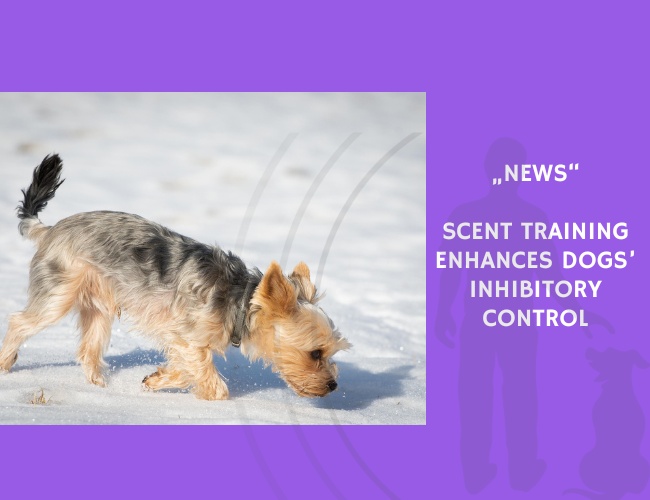
In a study published in Animals, Nerys Mellor and colleagues explored how different types of dog training—scent work, agility, and obedience—affect inhibitory control and cognitive performance. While previous research compared working or sporting dogs to untrained pets, this study examined how ordinary pet dogs might benefit cognitively from targeted training disciplines.
The researchers evaluated pet dogs using two classic tasks that measure cognitive flexibility and self-control. The first, the A-not-B task, tested whether dogs could inhibit a learned response and redirect their attention to a new reward location. The second, the detour task, assessed a dog’s ability to navigate around a transparent barrier to obtain a visible treat—requiring the inhibition of a direct but ineffective approach.
Across both tasks, dogs trained in scent work exhibited superior inhibitory control and persistence, even though overall success rates were similar among groups. This suggests that scent-based training strengthens behavioral regulation and problem-solving mechanisms, which are essential for learning and adaptability. Interestingly, dogs with more extensive overall training experience learned faster during the early stages of the A-not-B task, although this did not significantly impact their final test performance.
The results also revealed a strong correlation between success in the A-not-B and detour tasks, indicating a shared cognitive foundation in executive control. By contrast, agility and obedience training did not appear to enhance these specific inhibitory mechanisms to the same degree as scent training.
Mellor and colleagues highlight that differences in primary training discipline should be considered when studying canine cognition, rather than simply dividing dogs into “trained” and “untrained” categories. The findings support the growing view that scent work engages unique cognitive and sensory systems, improving focus, patience, and decision-making—skills that extend beyond the training context into everyday behavior.
Ultimately, this research underscores that enrichment-based, mentally engaging training methods like scent work not only provide stimulation but also cultivate a dog’s ability to regulate impulses and adapt to complex situations. Such cognitive benefits contribute to improved welfare, better communication with humans, and stronger cooperative performance in trained pet dogs.
Source: Mellor, N., McBride, S., Stoker, E., & Dalesman, S. (2024). Impact of Training Discipline and Experience on Inhibitory Control and Cognitive Performance in Pet Dogs. Animals, 14. Published January 29, 2024.










