
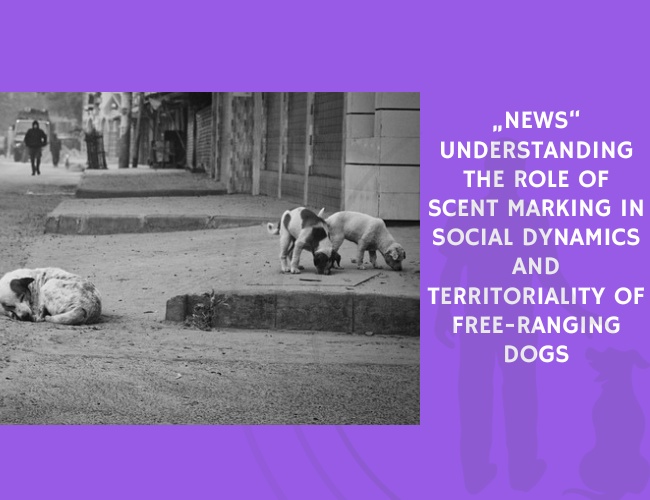
Published in Behavioral Ecology and Sociobiology, this study examined how free-ranging dogs respond to scent marks from individuals differing in sex, group affiliation, and territorial location. Scent marking, a deeply rooted form of canine communication, conveys critical information about ownership, reproductive status, and social hierarchy. The research focused on behavioral responses to strategically placed scent marks within and near territorial boundaries.
Both male and female dogs displayed heightened investigative interest in scent-marked locations compared to controls, yet their responses diverged in pattern and intensity. Males exhibited markedly stronger territorial behaviors—including overmarking, increased sniff duration, and vigilance—particularly when encountering scent marks from neighboring group males. This pattern suggests that scent-based recognition supports complex social navigation, blending elements of competition and information exchange.
Cluster analysis of behavioral data revealed that neighbouring male scent cues triggered the most distinct reactions, indicating that olfactory communication in free-ranging dogs functions as a multilayered signaling system. These findings demonstrate how free-ranging dogs manage territorial coexistence and social structure through scent-mediated awareness, without reliance on overt conflict.
Biswas and colleagues propose that studying these interactions offers insight into canine cognitive ecology and conflict avoidance strategies. Their research reinforces that for dogs, scent is not just a marker—it is a language of memory, emotion, and identity that sustains social balance across shared spaces.
Source: Biswas, S., Ghosh, K., Ghosh, S., Biswas, A., & Bhadra, A. (2024). What is in a scent? Understanding the role of scent marking in social dynamics and territoriality of free-ranging dogs. Behavioral Ecology and Sociobiology. Published September 18, 2024.










