
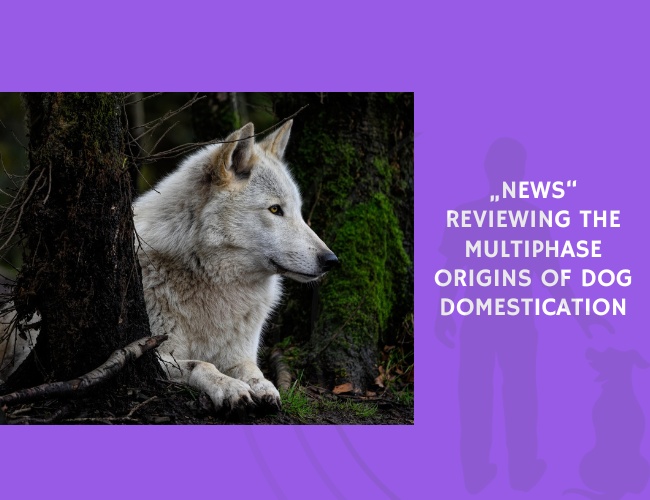
Published in Genes, this review by Domenico Tancredi and I. Cardinali synthesizes decades of research exploring how dogs (Canis familiaris) emerged through a multiphase domestication process. The authors describe an initial stage in which certain wolf populations were drawn to anthropogenic niches, likely scavenging near early human settlements. A second phase followed, marked by reciprocal relationships and growing social compatibility between wolves and humans.
The review emphasizes clear ecological differences between modern wolves and dogs, shaped by divergent lifestyles and selection pressures. Dogs evolved traits suited to human environments, including altered feeding behaviors, reduced flight responses, and increased social tolerance.
A key component of the paper examines molecular mechanisms implicated in affiliative and docile behaviors. The authors highlight findings from Belyaev’s fox domestication experiments, which demonstrate how selecting for tameness can lead to cascading developmental and behavioral changes. Similar pathways, including genes involved in stress response and neural crest development, appear relevant in canine domestication.
The review also explores ancient European dog genetics, focusing on three key Mediterranean peninsulas—the Balkan, Iberian, and Italian peninsulas. These regions represent pivotal areas for studying domestication dynamics due to their rich archaeological records and clearly identifiable European genetic structure. Uniparental markers reveal how ancient populations contributed to the diversity seen in modern dog breeds.
Together, these ecological, molecular, and genetic perspectives offer an integrated understanding of how wolves transitioned into one of humanity’s most successful animal partners.
Source: Tancredi, D., & Cardinali, I. (2023). Being a Dog: A Review of the Domestication Process. Genes. Published April 27, 2023.










