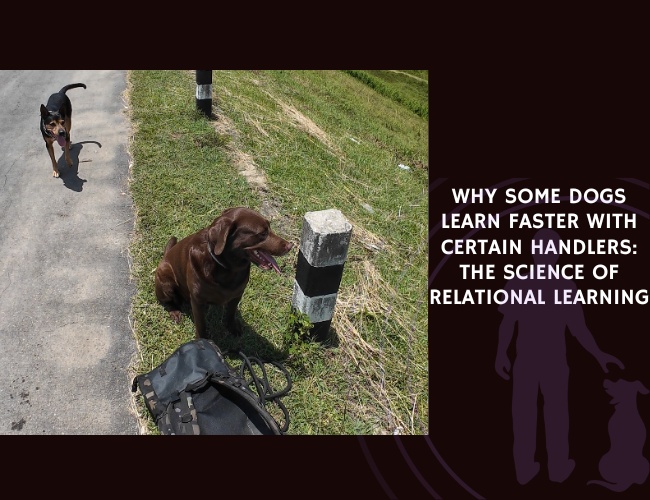
Published in Learning & Behavior, Monique Udell discusses a pivotal study by Marshall-Pescini et al. (2017) that challenges common assumptions about canine cooperation. While domestic dogs are widely admired for their social-cognitive abilities, their failures to cooperate in certain tasks have often been misinterpreted as cognitive shortcomings rather than reflections of broader contextual influences.
The commentary highlights that socioecological factors—such as living environment, available resources, social group structure, and human expectations—play a defining role in shaping cooperative behavior. Dogs and wolves respond differently depending on ecological pressures and social settings, meaning that performance in a single task cannot fully capture their cognitive capacities.
Udell also underscores the impact of learning history. Prior experiences with humans or conspecifics shape how dogs interpret social cues, manage challenges, and engage in cooperative tasks. A dog that has not been reinforced for cooperation may appear uncooperative not due to lack of ability, but due to mismatched learning conditions.
Another essential factor is relationship quality. Cooperation often depends on trust, emotional attunement, and the clarity of communication between partners. Dogs may fail to cooperate not because they lack understanding, but because the relational context does not support coordinated behavior.
Overall, Udell argues for a holistic framework when evaluating canine social cognition—one that integrates ecology, learning, and relational dynamics. This approach moves beyond simplistic interpretations and aligns more closely with the complex realities of dog–human and dog–dog social interaction.
Source: Udell, M. (2018). A New Approach to Understanding Canine Social Cognition. Learning & Behavior. Published July 6, 2018.