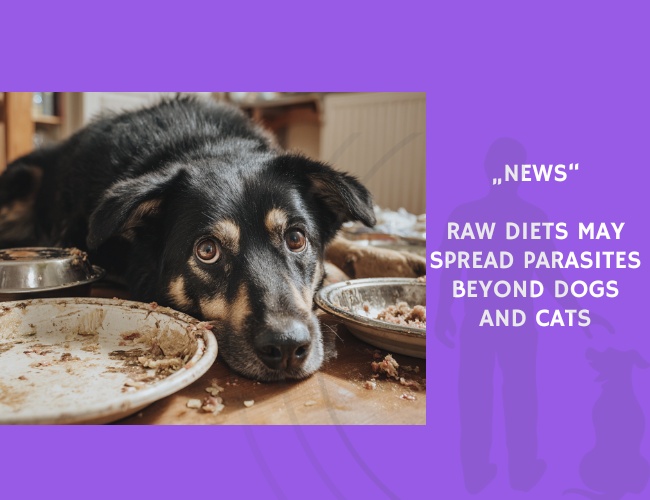
Published in Parasitology Research, this study by Barbara Tuska-Szalay and colleagues explored the potential parasitic hazards linked to the increasingly popular Biologically Appropriate Raw Food (BARF) diet. While raw feeding is often promoted for its perceived health benefits, it may also introduce hidden biological risks that extend beyond the pets consuming it.
The researchers analyzed fecal samples from 89 BARF-fed dogs and cats using coprological and molecular techniques. They detected several parasite species or remnants thereof, including Dicrocoelium dendriticum, Fasciola hepatica, Cystoisospora canis, Cystoisospora ohioensis-like species, Sarcocystis sp., and Eimeria stiedai. Importantly, the samples were negative for Neospora caninum and Toxoplasma gondii—parasites commonly associated with raw meat diets.
Although most detected organisms were likely pseudoparasites originating from the raw food itself rather than true infections, their presence has significant ecological implications. The study found that E. stiedai oocysts, derived from infected rabbit liver included in BARF meals, could pass through the digestive tract and be excreted, contaminating the environment. This poses a risk to nearby pet rabbits, which could contract biliary coccidiosis—a disease they would not otherwise encounter in typical domestic settings.
The authors conclude that while BARF diets may not always infect the dogs and cats directly, they can indirectly facilitate parasite transmission between species. These findings highlight a broader perspective on responsible pet feeding practices, emphasizing that the impact of raw diets extends beyond individual animal health to the well-being of the entire household ecosystem. Tuska-Szalay et al. urge increased awareness and hygienic precautions when handling or disposing of feces from raw-fed pets.
Source: Tuska-Szalay, B., Papdeák, V., Vizi, Z., Takács, N., & Hornok, S. (2024). Parasitological and molecular investigation of consequences of raw meat feeding (BARF) in dogs and cats: implications for other pets living nearby. Parasitology Research, 123. Published January 29, 2024.