
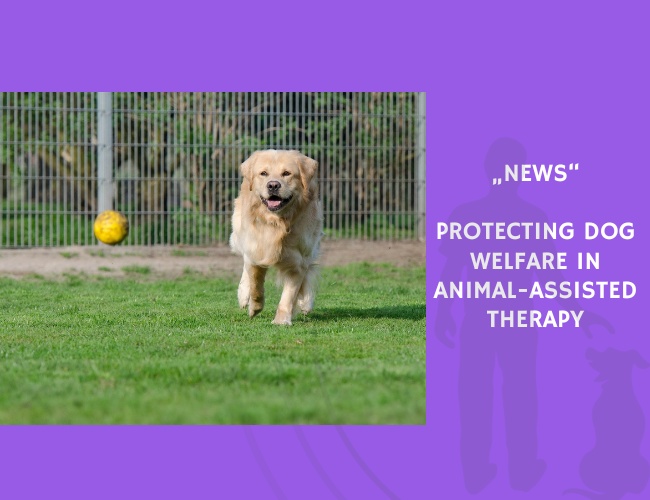
Animal-assisted therapy (AAT) has long been recognized for its benefits to humans, improving physical, cognitive, and psychosocial health. Yet, the welfare of the dogs providing these services has often been overlooked. Companion dogs do not choose to work in therapy; without safeguards, their natural sociability can be misinterpreted or exploited.
Winkle, Johnson, and Mills (2020) reviewed the state of AAT and highlighted the risks posed to dogs when suitability, training, and ongoing evaluation are not carefully managed. Dogs may face stress, anxiety, miscommunication, or even health problems if mismatched with tasks, handlers, or environments. Such outcomes not only compromise welfare but also reduce the effectiveness of therapy and endanger the human–dog partnership.
The authors propose a framework of best practices, emphasizing careful selection of dogs, humane-based training methods, and continuous welfare evaluations. By prioritizing the well-being of therapy dogs, providers can safeguard both animals and clients, ensuring ethical, sustainable, and professional AAT practice.
Source: Winkle, M., Johnson, A., & Mills, D. (2020). Dog Welfare, Well-Being and Behavior: Considerations for Selection, Evaluation and Suitability for Animal-Assisted Therapy. Animals, 10. Published November 1, 2020.










