
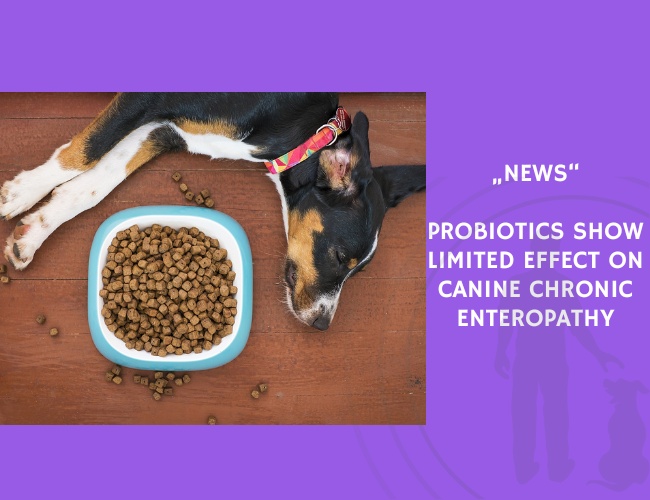
S. Schmitz, D. Werling, and K. Allenspach (2015) investigated whether probiotics modulate inflammasome activity in dogs suffering from chronic enteropathy (CE). The inflammasome, a protein complex that regulates the maturation of inflammatory cytokines IL-1β and IL-18, is known to play a critical role in intestinal inflammation in humans, but its role in dogs had not been studied.
Endoscopic biopsies were taken from CE-affected dogs and healthy controls. Researchers assessed gene expression of NLRP3, caspase-1, IL-1β, and IL-18 using RT-qPCR, alongside protein expression via immunohistochemistry. In CE dogs, caspase-1 and NLRP3 expression were lower than in controls. Ex-vivo treatment of control samples with Enterococcus faecium reduced NLRP3 expression, but in-vivo probiotic treatment in CE dogs—given alongside dietary therapy—showed no significant effect on inflammasome gene expression.
Interestingly, IL-1β protein expression declined with dietary treatment but not with probiotic supplementation. These results suggest that inflammasome components may contribute to inflammation in dogs with CE, but the mechanisms appear distinct from those in humans. Moreover, the probiotic Enterococcus faecium showed little direct benefit in altering inflammasome pathways in affected dogs.
The findings underline the importance of species-specific differences in intestinal immunity and caution against directly extrapolating human probiotic outcomes to canine medicine.
Source: Schmitz, S., Werling, D., & Allenspach, K. (2015). Effects of Ex-Vivo and In-Vivo Treatment with Probiotics on the Inflammasome in Dogs with Chronic Enteropathy. PLoS ONE, 10.










