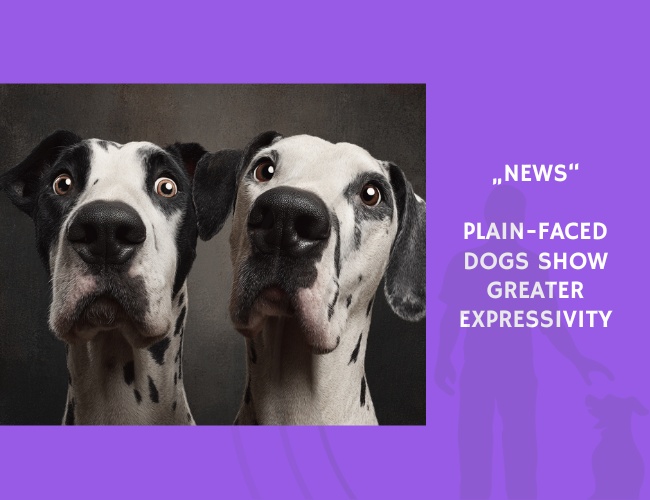
As dogs continue to adapt to increasingly complex roles in human society, their ability to communicate effectively with people is vital. Sexton and colleagues (2023) investigated whether facial markings, such as patches, eyebrows, or widow’s peaks, influence a dog’s expressivity in interactions with humans.
Using the Dog Facial Action Coding System (DogFACS) on more than 100 dogs from eight breed groups, the study found a statistically significant correlation: dogs with plainer faces tended to be more expressive (r = −0.326, p ≤ 0.001). These dogs distributed facial muscle movements more evenly across their face in social situations, particularly when engaging with their owners.
Age and training experience also shaped expressivity. Adult dogs were more expressive than senior dogs, and skilled or trained dogs displayed more facial activity than untrained ones. Owners of adult, plain-faced dogs were also better at correctly interpreting their pets’ expressions.
The findings highlight how physical appearance can affect not only how dogs are perceived, but also how they communicate. This has important implications for training, welfare, and strengthening the human–dog bond.
Source: Sexton, C., Buckley, C., Lieberfarb, J., Subiaul, F., Hecht, E., & Bradley, B. (2023). What Is Written on a Dog’s Face? Evaluating the Impact of Facial Phenotypes on Communication between Humans and Canines. Animals, 13.