
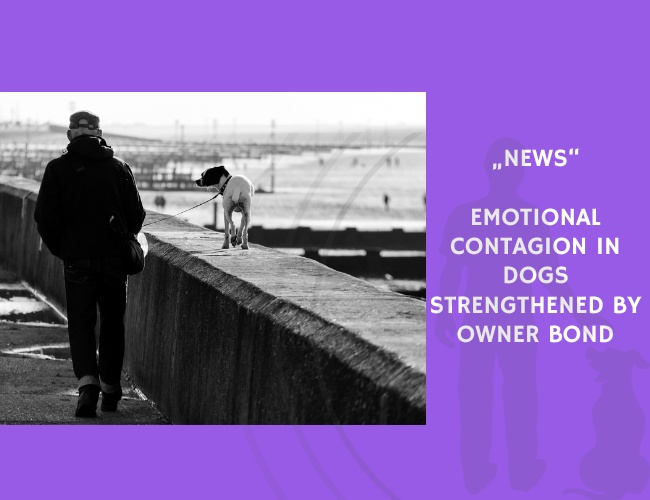
Emotional contagion, considered a basic form of empathy, occurs when one individual mirrors the emotional state of another. Dogs, having coexisted with humans for more than 30,000 years, are particularly adept at reading and responding to human emotions. Katayama et al. (2019) investigated whether the strength of this emotional transfer between humans and dogs was influenced by the length of their shared relationship and the dog’s sex.
The researchers measured both human and canine emotional reactions using heart rate variability (HRV), a physiological marker of emotional state. Dog–owner pairs were observed under psychological stress conditions applied to the owners, and their HRV patterns were compared. Results showed that the correlation between owner and dog HRV increased with the duration of ownership. This suggests that dogs attune more closely to their owners’ emotional states the longer they share an environment.
Sex differences also emerged. Female dogs displayed stronger correlations with their owners’ HRV values than males, both in stress and control conditions. This finding indicates that female dogs may be especially sensitive to human emotions, possibly reflecting differences in emotional responsiveness between sexes.
The study highlights that the bond between owners and dogs deepens emotional contagion, making shared living time a key factor in the emotional synchronization of human–dog pairs. These findings reinforce the idea that dogs are not just passive companions but active participants in shared emotional lives, shaped by both biology and long-term social interaction.
Source: Katayama, M., Kubo, T., Yamakawa, T., Fujiwara, K., Nomoto, K., Ikeda, K., Mogi, K., Nagasawa, M., & Kikusui, T. (2019). Emotional Contagion From Humans to Dogs Is Facilitated by Duration of Ownership. Frontiers in Psychology, 10. Published July 19, 2019.










