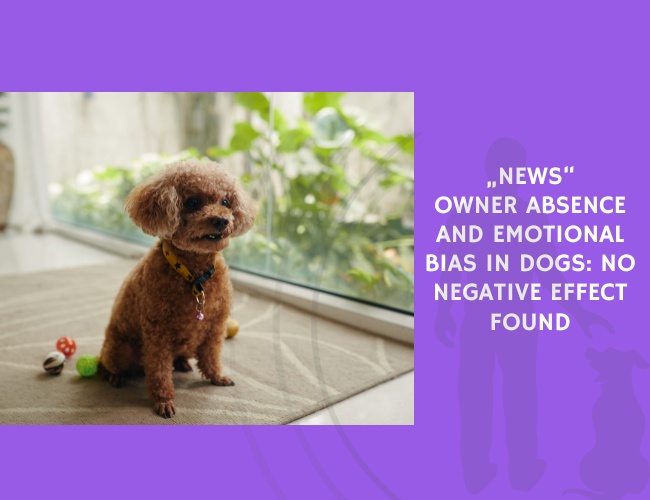
Published in Animal Cognition (Volume 15), this study explored how owner absence influences affective processing in pet dogs using a judgment bias paradigm—a method adapted from human psychology to assess whether emotional states influence decision-making. In humans, negative moods typically produce pessimistic interpretations of ambiguous stimuli. Extending this to dogs, researchers hypothesized that temporary separation might induce anxiety and bias dogs toward negative expectations.
Dogs were tested with a go/no-go procedure in which they were trained to discriminate between stimuli predicting positive or negative outcomes. The key question: would their judgment of ambiguous stimuli change when their owner was absent? Surprisingly, results revealed no significant difference between the dogs’ responses during owner presence or absence. This suggests that brief separations—common in daily routines—do not inherently trigger emotional distress in dogs accustomed to them.
The findings point to an important distinction between acute separation and chronic separation distress. Dogs who experience short, predictable absences as part of their normal environment likely develop emotional stability and coping mechanisms that buffer against transient anxiety. Additionally, the study raises methodological questions about the sensitivity of existing judgment bias tests, as subtle affective shifts may go undetected with conventional designs.
From a relational perspective aligned with the Invisible Leash framework, this research reinforces that secure connection enables autonomy. Dogs with balanced attachment systems can tolerate physical absence without emotional collapse—illustrating how stability and trust form the psychological foundation for independence. Emotional resilience, rather than constant proximity, defines true attachment in both human and canine bonds.
Source: Müller, C. A., Riemer, S., Rosam, C., Schößwender, J., Range, F., & Huber, L. (2012). Brief owner absence does not induce negative judgement bias in pet dogs. Animal Cognition, 15, 1031–1035. Published July 3, 2012.