
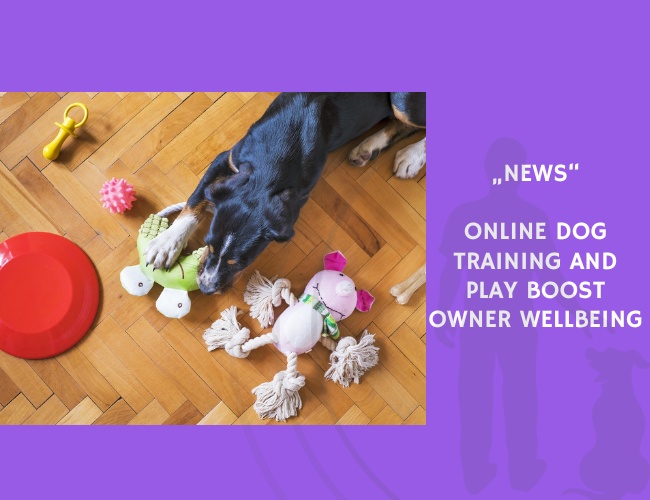
During the COVID-19 pandemic, many dog owners turned to at-home activities to strengthen their bond with their pets and maintain wellbeing. While unstructured play with dogs has long been associated with reduced anxiety and improved mood, few studies have explored the psychological effects of structured training. Napier et al. (2021) examined this question by comparing the impact of online-guided training and unstructured play sessions on owner wellbeing.
The study involved 83 participants, randomly assigned to either a training group—engaging in a 10-minute obedience training session—or a play group—engaging in 10 minutes of free play. Before starting, all participants completed the Dog Owner Relationship Scale (DORS) and watched instructional videos. Anxiety, mood, and self-efficacy were measured before and after sessions using the STAI-6, PANAS, and NGSE scales.
The results showed no significant differences between training and play groups; however, both groups experienced substantial improvements over time. Owners reported lower anxiety, enhanced positive mood, reduced negative affect, and higher self-efficacy. Importantly, the quality of the dog-owner relationship did not moderate these effects, suggesting that the benefits were broadly applicable across participants regardless of relationship strength.
These findings indicate that even a brief, single-session, online-guided interaction with a dog—whether structured training or free play—can confer short-term psychological benefits to owners. This underscores the therapeutic potential of dog-human interactions in promoting resilience and wellbeing during stressful times, and suggests that both play and training are valuable tools for enhancing mental health.
Source: Napier, A., Bennett, P., & Howell, T. (2021). The Effects of an Online-Guided, At-Home Dog Training Session on Owner Anxiety, Mood, and General Self-Efficacy During COVID-19. Human-Animal Interaction Bulletin. Published December 1, 2021.










