
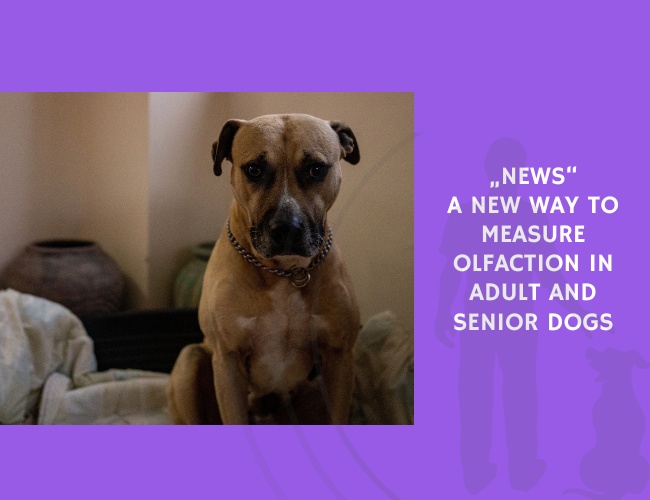
Published in Scientific Reports, the study by Michael Z. Khan, A. Mondino, and colleagues addresses a gap in canine olfaction research: the limited understanding of hyposmia (reduced sense of smell) and anosmia (loss of smell) in pet dogs. Traditional olfaction assessments often suffer from confounds such as training requirements, environmental distractions, and variability in motivation.
The researchers designed a three-choice hiding task in which dogs had to locate a concealed food treat using their natural search behavior. The test was conducted under both light-phase and dark-phase conditions to reduce visual cues and emphasize reliance on olfaction. The sample included 18 adult control dogs, 18 senior or geriatric dogs enrolled in a longitudinal aging study, and one dog with severe nasal pathology.
Findings showed that both adult and senior dogs demonstrated higher accuracy in the dark-phase (p < 0.0001), indicating that reduced visual input encouraged more scent-reliant searching. Dogs were also less likely to use biased search strategies in the dark-phase (p < 0.01). Despite performing above chance, senior dogs showed lower accuracy than adult dogs specifically under dark-phase conditions (p = 0.036), suggesting subtle age-related olfactory decline.
An intriguing result was the positive correlation between owner-reported cognitive decline and olfaction performance in the dark-phase. Dogs with higher cognitive decline scores performed better on the olfaction task, though performance on other cognitive tests did not correlate with scent performance. The authors note that this may reflect compensatory strategies or motivational differences rather than enhanced olfactory ability.
The study highlights that this novel, low-training olfaction task provides clear behavioral endpoints and minimizes confounding variables, making it a practical tool for assessing scent detection across the canine lifespan. It offers new avenues for evaluating olfactory aging, monitoring health conditions, and understanding sensory changes in companion dogs.
Source: Khan, M. Z., Mondino, A., & Gruen, M., et al. (2023). A Novel Task of Canine Olfaction for Use in Adult and Senior Pet Dogs. Scientific Reports. Published February 8, 2023.










