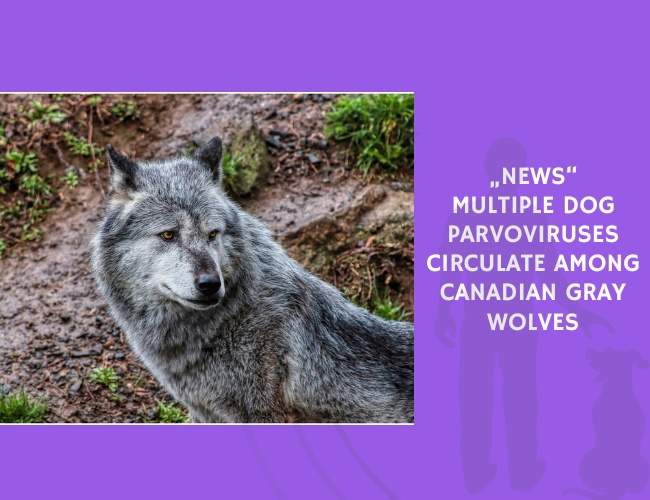
Published in Transboundary and Emerging Diseases, the study by M. Canuti, Kelsi Fry, H. Dean Cluff, F. Mira, H. Fenton, and A. Lang provides a comprehensive 13-year analysis of DNA virus diversity in 303 gray wolves inhabiting the Northwest Territories. The research investigated prevalence patterns, distribution, and long-term circulation of multiple canine viruses in a vast and sparsely populated region.
The authors detected a diverse viral landscape, including canine bufavirus (CBuV, 42.6%), canine parvovirus 2 (CPV-2, 34.0%), canine bocavirus 2 (CBoV-2, 5.0%), cachavirus (CachaV-1, 2.6%), canine adenovirus 1 (CAdV-1, 1%), and minute virus of canines (MVC, 0.3%). Notably, this represents the first documented detection of CBoV-2, MVC, and CachaV-1 in wild animals.
The study also found that CBuV and CachaV-1 had been circulating in the wolf population for at least 11 and 10 years, respectively, before their scientific discovery. Although CBuV showed the highest overall prevalence, CPV-2 was most common among juvenile wolves, while CBuV infection correlated with poor nutritional condition.
Despite its low prevalence, CachaV-1 had the highest multiple-infection rate at 87.5%, suggesting complex interactions between viruses and host factors. The researchers observed high genetic diversity among most detected viruses, identifying three new variants. Some variants appeared endemic across the entire study region, while others showed more restricted spatial or temporal patterns, hinting at differing introduction times or limited wolf pack mixing.
The findings underscore how viral ecology in wild canids reflects a combination of viral traits—such as infectivity and tissue tropism—and host ecology, including pack structure, carnivory, and proximity to human-inhabited areas. Understanding these dynamics is essential for wildlife health monitoring and for assessing potential spillover risks to domestic dogs and other species.
Source: Canuti, M., Fry, K., Cluff, H. D., Mira, F., Fenton, H., & Lang, A. (2022). Co-circulation of five species of dog parvoviruses and canine adenovirus type 1 among gray wolves (Canis lupus) in northern Canada. Transboundary and Emerging Diseases. Published February 11, 2022. Authors affiliated with institutions specializing in virology, wildlife biology, and environmental health.