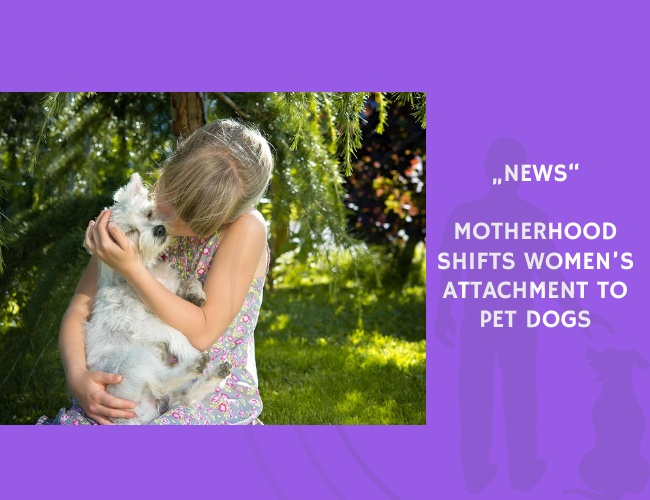
The transition to parenthood is a profound period of adjustment, not only in human relationships but also in the way families relate to their pets. While dogs often occupy an important emotional role in households, little research has explored how becoming a parent reshapes these attachments.
Campbell & Oliva (2024) investigated differences in attachment orientations toward pet dogs among 98 new mothers and 93 childless women in Australia. Participants completed surveys measuring levels of anxious and avoidant attachment to their pet dogs, providing both quantitative and qualitative insights.
The findings revealed that first-time mothers were more avoidant and less anxious in their attachment to their dogs compared to childless women. Qualitative responses suggested this shift was linked to reduced time, energy, and attention available for the dog, as caregiving priorities were redirected toward the newborn child. Many mothers reported that the dog’s role in the family had been redefined, though the emotional bond remained important.
This research highlights how life transitions reshape human–animal relationships. For both maternal and pet welfare, the authors suggest that new parents may benefit from support in balancing care demands while maintaining meaningful engagement with their dogs.
Source: Campbell, K. I., & Oliva, J. L. (2024). Four’s a Crowd? Attachment Styles in Childless Women and First-Time Mothers Toward Their Pet Dog. Anthrozoös, 37, 727–743. Published June 21, 2024.