
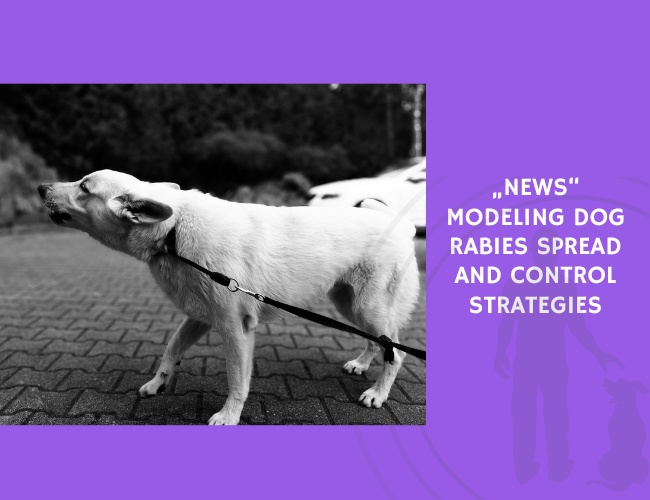
Rabies remains a universally fatal yet vaccine-preventable disease, with domestic dogs responsible for approximately 99% of human rabies deaths in developing regions. Despite decades of control efforts, dog-mediated rabies continues to circulate and expand into previously rabies-free areas, underscoring the need for improved understanding of transmission and control.
This scoping review synthesized 59 peer-reviewed studies published up to 2021, including 30 mathematical modeling studies, 22 phylodynamic analyses, and 7 interdisciplinary investigations. The authors assessed how these approaches have contributed to explaining rabies persistence, spread, and the effectiveness of vaccination strategies in domestic dog populations.
Mathematical models, often developed using sparse or incomplete epidemiological data, consistently demonstrated the overwhelming effectiveness of mass dog vaccination across diverse ecological and socio-economic settings. These models clarified the importance of dog population structure, high turnover rates, and frequent reintroductions in sustaining endemic rabies even where vaccination coverage is substantial.
Phylodynamic approaches, based on viral genetic sequences, complemented these findings by revealing the evolutionary and spatial drivers of rabies spread. Across multiple regions, phylodynamic studies identified human-mediated dog movement and long-distance transportation as key contributors to rabies persistence, often outweighing short-range natural dog-to-dog transmission. These analyses highlighted reintroduction events as a recurring obstacle to local elimination.
However, both approaches face important methodological limitations. Data collection biases, underreporting of cases, and uneven genomic sampling constrain inference accuracy. Moreover, neither modeling nor phylodynamics alone can fully explain local transmission mechanisms, the role of wildlife in maintaining dog rabies, or the impact of community behavior on vaccination success.
The review identified interdisciplinary studies as particularly powerful, as they integrate epidemiological data, viral genomics, dog ecology, and human behavior. Such approaches enable reconstruction of local transmission chains and provide more realistic assessments of control strategies.
The authors conclude that future progress depends on integrated frameworks combining mechanistic models and phylodynamic inference within a single analytical structure. Leveraging viral sequences alongside ecological and social data would significantly refine predictions and optimize vaccination strategies, aligning dog rabies research with the One Health concept that links human, animal, and environmental health.
Source: Layan, M., Dellicour, S., Baele, G., Cauchemez, S., & Bourhy, H. (2021). Mathematical modelling and phylodynamics for the study of dog rabies dynamics and control: A scoping review. :contentReference[oaicite:1]{index=1}.










