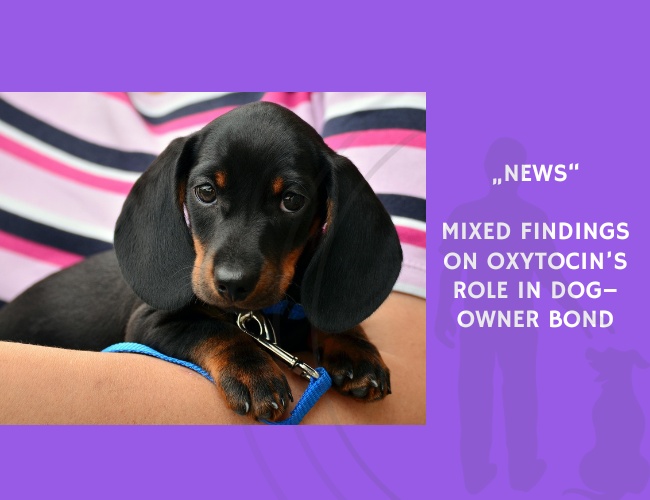
The hormone oxytocin is often described as a biological foundation for social bonding, and past studies suggested it surges during positive dog–owner interactions. Marshall-Pescini et al. (2019) tested this hypothesis more rigorously by comparing interactions between dogs and their owners with those involving a familiar, but not closely bonded, human partner.
The researchers measured oxytocin reactivity in urine samples from both dogs and humans before and after these interactions. Contrary to expectations, results showed no consistent increase in oxytocin for either dogs or their owners, regardless of whether the interaction was with a bonded partner or a familiar individual. The findings contrasted with previous reports of oxytocin surges following cuddling, play, or other socio-positive encounters.
The authors suggest that variability in methodology and measurement techniques may explain the conflicting results across studies. They call for greater standardization of oxytocin research, as well as careful consideration of factors like relationship quality, interaction type, and potential publication bias in interpreting past findings.
This study emphasizes that while oxytocin is important, the dog–owner bond is complex, likely shaped by multiple biological, emotional, and contextual factors beyond hormonal responses alone.
Source: Marshall-Pescini, S., Schaebs, F. S., Gaugg, A., Meinert, A., Deschner, T., & Range, F. (2019). The Role of Oxytocin in the Dog–Owner Relationship. Animals, 9. Published October 1, 2019.