
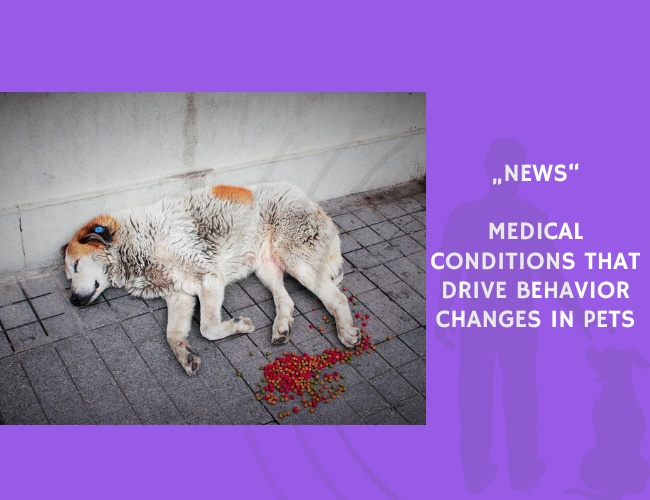
Behavior and health are closely intertwined in companion animals. Yet, for years, veterinarians and behaviorists often treated medical conditions and behavioral problems as separate issues. Camps, Amat, and Manteca (2019) reviewed the scientific literature to emphasize how underlying health issues can significantly alter behavior in dogs and cats.
The review highlights several key medical factors. Pain-related conditions are among the most common, with subtle behavioral changes often being the only indicator of discomfort. Similarly, endocrine and metabolic disorders, including hypothyroidism and hyperthyroidism, are linked to altered mood and activity levels. The authors also draw attention to neurological conditions such as mild brain injuries, ischemic attacks, epilepsy, or tumors in silent zones of the brain, which can influence behavior without obvious clinical signs.
Other contributors include vomeronasal organ alterations, affecting scent processing and social interactions, as well as cardiac disorders that may indirectly influence behavior. Importantly, the authors note that many of these links remain understudied in veterinary medicine, particularly compared to human and laboratory animal research.
The review concludes that veterinarians should consider medical causes when assessing behavioral issues. By improving diagnostic protocols and integrating medical evaluations into behavioral assessments, treatment outcomes for dogs and cats can be significantly enhanced.
Source: Camps, T., Amat, M., & Manteca, X. (2019). A Review of Medical Conditions and Behavioral Problems in Dogs and Cats. Animals, 9. Published December 1, 2019.










