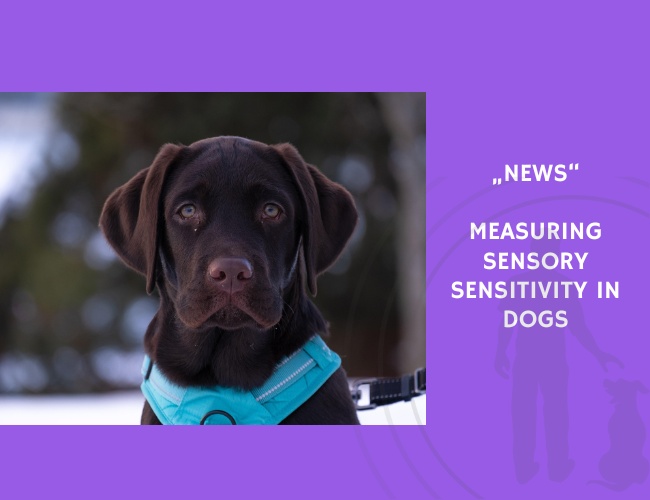
The concept of sensory processing sensitivity (SPS)—well established in humans—describes a tendency to deeply process sensory input, sometimes leading to overarousal. Until recently, it was unclear whether dogs shared a similar trait. Braem et al. (2017) adapted the “Highly Sensitive Person” framework to develop a canine-specific measure, the Highly Sensitive Dog questionnaire (HSD-s).
The study analyzed data from over 3,600 dog–owner pairs worldwide. Results demonstrated that the HSD-s showed good internal consistency, as well as strong intra- and inter-rater reliability. Importantly, dogs’ sensitivity scores correlated only moderately with related traits like fearfulness and neuroticism, confirming that sensitivity represents a distinct personality dimension.
Further analysis revealed three subtraits of sensitivity, comparable to those documented in humans. Demographic and owner-related factors explained only a small amount of variance, suggesting that—like in humans—genetic influences may underlie canine sensory sensitivity. The study also highlights that recognizing this trait could help owners and trainers better adapt environments and methods to highly sensitive dogs, improving welfare, training success, and quality of life.
By confirming that SPS exists in dogs, this research opens new opportunities to explore links between sensitivity, stress vulnerability, and coping strategies in companion animals.
Source: Braem, M., Asher, L., Furrer, S., Lechner, I., Würbel, H., & Melotti, L. (2017). Development of the “Highly Sensitive Dog” questionnaire to evaluate the personality dimension “Sensory Processing Sensitivity” in dogs. PLoS ONE, 12, e0177616. https://doi.org/10.1371/journal.pone.0177616