
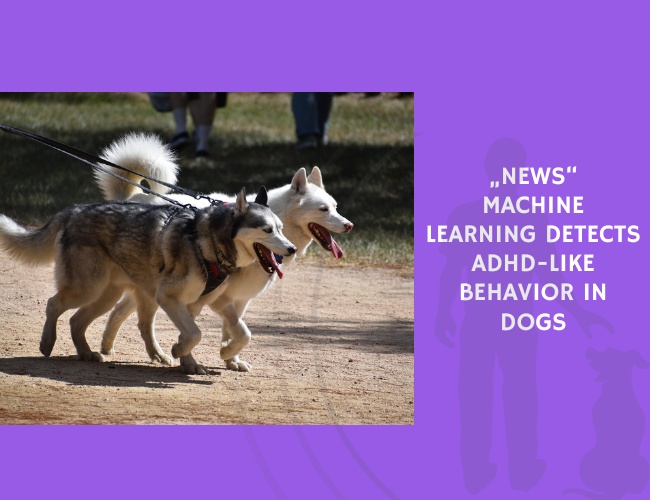
Published in Animals, the study by Asaf Fux, A. Zamansky, D. Kaplun, and colleagues addresses an important gap in veterinary behavioral diagnostics. Canine ADHD-like behavior affects both dog welfare and owner quality of life, yet diagnosis traditionally relies on owner reports and clinician impressions—processes susceptible to subjectivity.
To tackle this challenge, the researchers developed a machine learning classifier capable of distinguishing dogs clinically treated for ADHD-like behavior from healthy controls with an accuracy of 81%. The system evaluates video footage recorded during routine consultations, allowing for noninvasive and easily scalable assessment.
Beyond classification, the model generates an H-score that reflects the severity of ADHD-like behavior. In preliminary clinical testing, 8 out of 11 dogs receiving medical treatment for excessive hyperactivity showed a reduction in their H-score, demonstrating the method’s sensitivity to behavioral change.
The study integrates feedback from a focus group of four behavior experts, who evaluated the potential clinical relevance of the H-score. Their insights suggest that video-based and automated metrics could enhance diagnostic reliability, monitor treatment response, and support clinical decision-making.
By combining veterinary behavioral science with machine learning, this research represents a major step toward more objective and evidence-based assessment tools for behavioral disorders in dogs. Such methods may ultimately improve early detection, guide treatment selection, and enhance welfare outcomes for dogs exhibiting ADHD-like behavior.
Source: Fux, A., Zamansky, A., Kaplun, D., et al. (2021). Objective Video-Based Assessment of ADHD-Like Canine Behavior Using Machine Learning. Animals. Published September 26, 2021. Authors affiliated with institutions in medicine, computer science, and veterinary behavioral research.










