
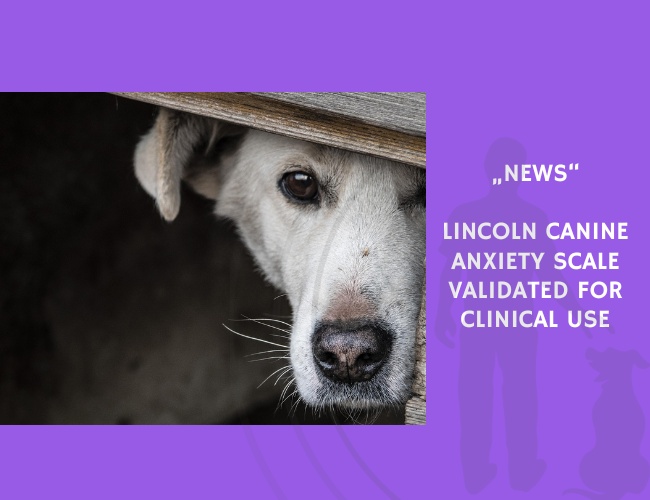
Anxiety, particularly noise-related phobias, is a widespread problem in dogs, but clinical evaluation has often relied on unvalidated or inconsistent methods. To address this, Mills, Mueller, McPeake, and Engel (2020) developed and psychometrically validated the Lincoln Canine Anxiety Scale using data from 226 dogs in a double-blind, placebo-controlled study.
The 16-item scale demonstrated strong internal consistency, with most item-to-total correlations above 0.48 and a Cronbach’s alpha of 0.88. Principal Component Analysis confirmed the scale’s unidimensional structure, and Item Response Theory showed it could be streamlined to 11 items without loss of validity. The scale was sensitive to both treatment effects and anxiety-eliciting stimuli, such as New Year’s Eve fireworks.
Importantly, the Lincoln Canine Anxiety Scale distinguished between effective and ineffective treatments, with a score change of around 20 points indicating meaningful differences. Dogs treated with imepitoin showed significantly better outcomes compared to placebo-treated dogs, demonstrating the scale’s clinical utility.
This validated tool provides veterinarians and researchers with a structured method to monitor canine anxiety, paving the way for more evidence-based treatment approaches and improving welfare in dogs suffering from fear and anxiety disorders.
Source: Mills, D., Mueller, H., McPeake, K., & Engel, O. (2020). Development and Psychometric Validation of the Lincoln Canine Anxiety Scale. Frontiers in Veterinary Science, 7. Published April 3, 2020.










