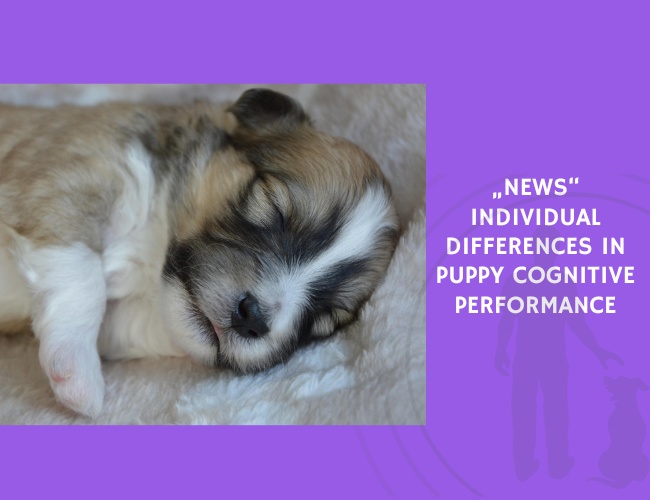
Published in Animal Cognition, this study examined how individual differences shape early cognitive performance in companion dogs under 12 months of age. While prior work in working dog populations has reported age-related improvements during early development, comparable evidence in diverse companion dog populations has been limited.
The researchers assessed puppies using two tasks intended to capture aspects of executive function: the Delayed-Search Task (DST) and the Detour Reversal Task (DRT). In parallel, owners completed the Canine Behavioral Assessment and Research Questionnaire (C-BARQ) to quantify temperament dimensions potentially influencing task performance.
Contrary to expectations and earlier findings in working dogs, age was not associated with improved performance on either task. The authors note that this null result likely reflects small sample sizes and substantial variability driven by other individual factors rather than an absence of developmental change.
Temperament emerged as a key predictor of performance. On the DST, nonsocial fear and excitability scores from the C-BARQ significantly predicted outcomes, but these effects differed between male and female dogs. For the DRT, excitability also predicted performance, with effects that varied as a function of age, suggesting complex interactions between temperament and development.
Importantly, the study found no correlations between performance measures across the two tasks, raising concerns about construct validity and whether these tasks assess shared underlying cognitive processes in young dogs.
The authors conclude that cognitive performance in puppies is shaped by a multifactorial interplay of temperament, sex, and age-related factors. While preliminary, these findings highlight the need for larger, longitudinal studies and more refined task batteries to better understand early cognitive development in companion dogs.
Source: Smith, J. G., Krichbaum, S., Montgomery, L. I., Cox, E., & Katz, J. S. (2024). A preliminary analysis of the effect of individual differences on cognitive performance in young companion dogs. Animal Cognition. Published April 1, 2024.