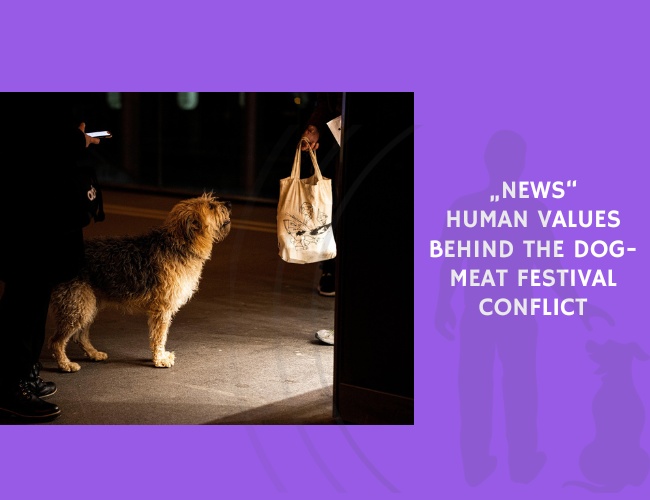
The study by Bai Rubi examines the contentious debates surrounding the Guangxi Yulin Dog-Meat Festival, a long-standing cultural practice that has drawn intense national and international criticism. Through a conflict behavior model, the author analyzes the internal mechanisms driving opposing viewpoints and highlights the moral tensions at the center of the public discourse.
A central finding is that conflict arises not merely from differing preferences but from deeper ideological divides. On one side lies humanitarianism, emphasizing compassion, animal protection, and evolving ethical norms. On the other is utilitarianism, which regards dog consumption as culturally legitimate, economically beneficial, or socially traditional. These competing frameworks shape motivations, justifications, and interpretations of legitimacy for both eating and protecting dogs.
The study argues that these value conflicts become self-reinforcing: utilitarian positions gain legitimacy from custom and perceived efficiency, while humanitarian positions draw strength from global ethical trends and growing awareness of animal welfare. As debates escalate, each side questions the moral standing of the other, deepening conflict.
To bridge these divides, the author calls for structured public dialogue facilitated by government institutions. Through open discussion, improved legislation, and moral guidance, the study suggests society can gradually shift customs, enhance welfare standards, and reduce cultural polarization. Such an approach emphasizes that sustainable change must incorporate both public cognition and ethical development.
Source: Bai Rubi (2015). Humanity and Utility: “Dog-Meat-Festival” Conflict Behavior Analysis Under the Legitimacy and Efficiency Mechanism. Political Science, Sociology.