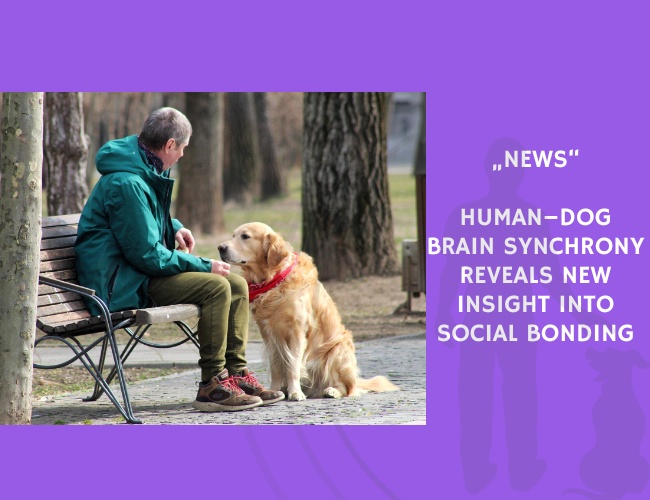
Published in Advanced Science, this pioneering study by Wei Ren and colleagues investigated how brain activity aligns between humans and dogs during social interaction. Using simultaneous electroencephalography (EEG), the researchers found that mutual gaze and petting triggered synchronized neural activity in the frontal and parietal regions of both species. These areas are linked to social cognition, empathy, and attention.
Over five consecutive days of interaction, the strength of neural coupling increased as the pairs became more familiar, demonstrating that repeated positive contact enhances interspecies attunement. The information flow analysis revealed an intriguing pattern: during communication, humans led the neural synchrony while dogs followed, suggesting a directional dynamic in shared emotional processing.
The team further explored this phenomenon using Shank3 mutant dogs, a genetic model for autism spectrum disorder (ASD). These dogs displayed disrupted interbrain coupling and diminished attention toward human partners, mirroring social difficulties seen in human ASD. Remarkably, treatment with lysergic acid diethylamide (LSD) restored neural synchrony and social engagement, indicating a potential avenue for future neuropsychiatric research.
Ren et al. conclude that interbrain neural coupling provides a biological explanation for the empathic and communicative bond between humans and dogs. The study bridges neuroscience and animal behavior, highlighting how deeply our brains can synchronize with those of our canine companions—an evolutionary reflection of trust, familiarity, and affection.
Source: Ren, W., Yu, S., Guo, K., Lu, C., & Zhang, Y. Q. (2024). Disrupted Human–Dog Interbrain Neural Coupling in Autism‐Associated Shank3 Mutant Dogs. Advanced Science, 11. Published September 11, 2024.