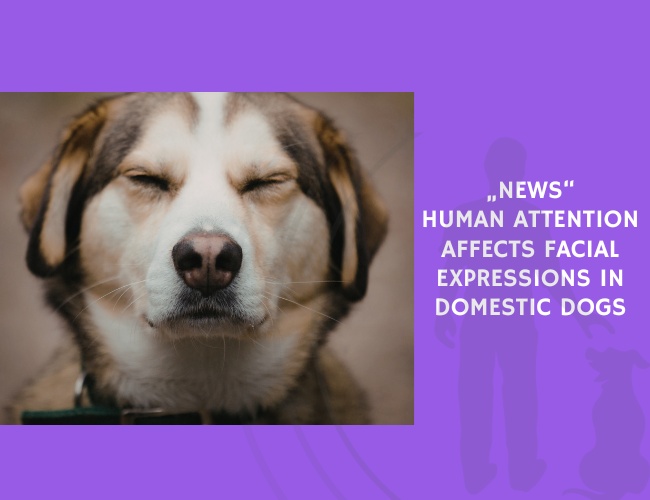
Published in Scientific Reports, this study tested whether domestic dog facial expressions are influenced by a human observer’s attentional state or simply triggered by internal arousal (such as the presence of food). Dogs were exposed to an experimental setup where a human demonstrator was either attentive or turned away, and trials varied in the presence or absence of food stimuli.
The findings were striking: dogs produced significantly more facial movements—particularly eye and mouth-related expressions—when the human was watching them, independent of food availability. In contrast, the presentation of food alone did not elicit comparable expressive activity. This indicates that dogs are socially aware of human attention and use their facial expressions as a form of intentional communication.
Kaminski and her colleagues concluded that dog facial expressions represent flexible communicative behaviors designed to capture or maintain human engagement, challenging the long-held view that animal expressions are purely involuntary. These results align with the idea that domestication has refined dogs’ social-cognitive sensitivity, allowing them to read and respond to human attention states with nuanced expressive control.
This research deepens our understanding of the co-evolutionary dialogue between humans and dogs. Facial expressions, once considered a one-way emotional display, emerge here as an active, adaptive tool—bridging the communicative gap between species through shared social awareness.
Source: Kaminski, J., Hynds, J., Morris, P., & Waller, B. (2017). Human attention affects facial expressions in domestic dogs. Scientific Reports, 7. Published October 19, 2017.