
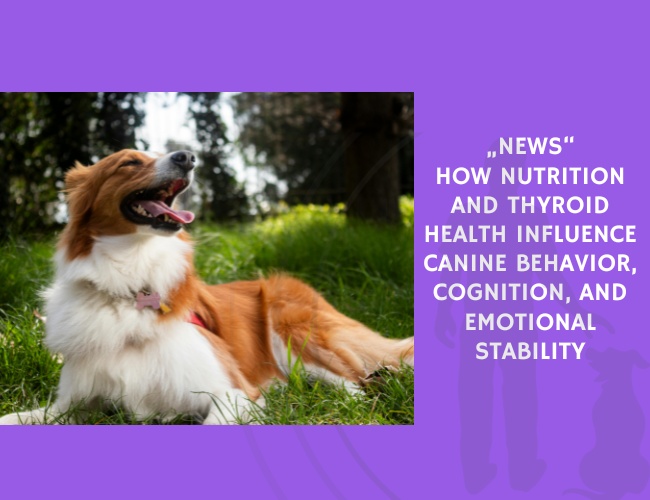
In this 2016 study, W. Dodds highlights the profound impact of thyroid health and nutritional balance on canine behavior, cognition, and emotional stability. The author argues that while dogs have been domesticated to serve as companions for nearly 2,000 years, selective breeding and dietary changes have also influenced their physiological and psychological development—sometimes with unintended consequences.
Dodds explains that thyroid hormones regulate metabolism, brain function, mood, and energy levels. When thyroid function is disrupted—through genetic predisposition, poor nutrition, autoimmune disease, or environmental factors—dogs may exhibit changes in behavior, attention patterns, learning ability, irritability, anxiety, or impulse control. These behavioral shifts often mimic or are misinterpreted as training or temperament problems.
The study emphasizes that nutrition plays a central role in supporting healthy thyroid activity. Deficiencies in key nutrients such as iodine, selenium, tyrosine, omega-3 fatty acids, and certain B vitamins can impair hormonal regulation and lead to cognitive changes. Conversely, diets rich in endocrine-supportive nutrients enhance mental clarity, emotional balance, and stress resilience in dogs.
Dodds also discusses how selective breeding has unintentionally affected both endocrine health and behavioral traits. Certain breeds are more vulnerable to thyroid-related issues, which may manifest as unpredictable mood changes, aggression, excessive reactivity, lethargy, or social withdrawal. These symptoms are often misunderstood as behavioral disorders rather than physiological imbalances.
Furthermore, the study underscores the importance of considering thyroid function when evaluating canine behavior in training, therapy, or family settings. The author suggests that understanding the interplay between biology, cognition, and environment is essential to promoting both canine welfare and the quality of the dog–human relationship.
Dodds concludes that a more integrated approach—combining nutritional science, veterinary endocrinology, cognitive psychology, and behavior studies—will improve our understanding of canine emotional well-being. By recognizing the biochemical foundations of behavior, we can better support dogs’ cognitive health and strengthen the human–canine bond.
Source: Dodds, W. (2016). Nutrition and Thyroid Function Affect Canine Behavior and Cognition. Published 2016.










