
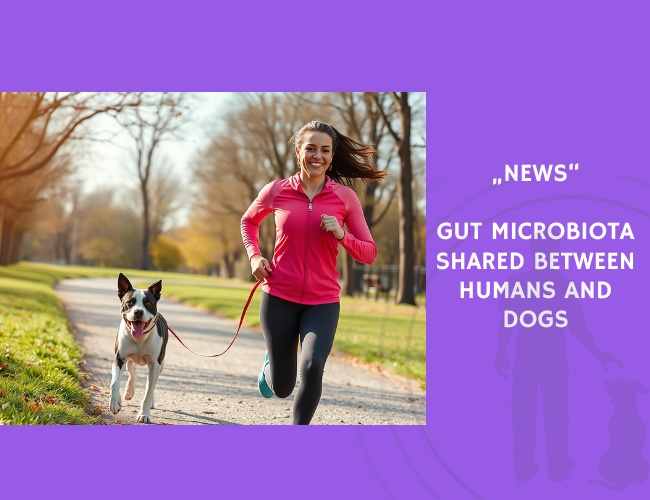
The concept of One Health emphasizes the interconnectedness of humans, animals, and the environment. Within this framework, cohabitation between humans and dogs has long been recognized as beneficial for physical, mental, and social well-being. However, until recently, little was known about whether this relationship extended to the microscopic level of the gut microbiota.
Ito et al. (2024) conducted microbiome and 16S rRNA gene amplicon sequence variant (ASV) analyses to investigate microbial sharing between human–dog pairs. The study found that while the overall structure of gut microbiota remained stable after three months of adaptation, some ASVs were directly shared between humans and their dogs. Many of these shared microbes were also among the most abundant within each host, suggesting abundance may play a role in facilitating microbial transfer.
The findings provide strong evidence for the direct transfer of gut bacteria between humans and dogs. This discovery highlights a potential pathway through which cohabitation can impact health, supporting the One Health perspective that human and animal health are intrinsically linked. Future research may reveal how these microbial exchanges affect immune function, metabolism, and disease resistance in both species.
Source: Ito, Y., Nagasawa, M., Koyama, K., Ito, K., & Kikusui, T. (2024). Comparative analysis based on shared amplicon sequence variants reveals that cohabitation influences gut microbiota sharing between humans and dogs. Frontiers in Veterinary Science, 11. Publication Date: April 12, 2024. Citations: 1.










