
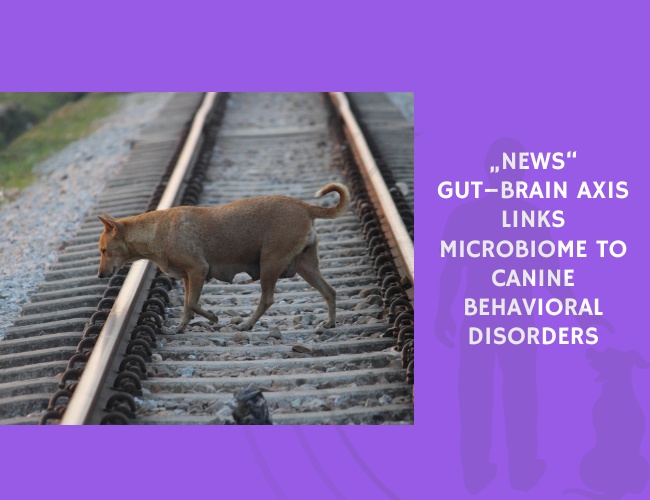
Published in Animals, this comprehensive review by Paula Kiełbik and O. Witkowska-Piłaszewicz synthesizes current knowledge on how gut dysbiosis influences canine emotional and behavioral health. Behavioral disorders are among the most common challenges faced by dog owners, and standard behavioral therapies do not always provide adequate improvement—creating demand for novel therapeutic approaches.
The authors outline how the gut microbiome, immune system, and nervous system are in continuous bidirectional communication, shaping physiology, stress responses, and behavior. Central to this interaction are neurotransmitters regulated by gut microbes and microbial metabolites such as short-chain fatty acids (SCFAs), which play key roles in brain function and emotional regulation.
The review highlights that gut dysbiosis—an imbalance of microbial communities—is strongly associated with inflammation and activation of the hypothalamic–pituitary–adrenal (HPA) axis. Chronic activation of these pathways has been linked to anxiety, stress, and other behavioral changes in dogs, paralleling findings from human and rodent studies.
Importantly, the authors discuss how behavioral disorders may arise from or be exacerbated by disruptions to the gut–brain axis. Evidence from multiple species indicates that individuals with mental disorders often exhibit altered gut microbiota profiles, strengthening the case for a mechanistic connection.
Given this growing understanding, the review examines emerging therapeutic strategies aimed at modulating the gut microbiota. Among these is fecal microbiome transplantation (FMT), which transfers fecal matter from a healthy donor to a recipient to help reestablish a balanced gut ecosystem. While research in dogs is still limited, the authors outline early findings and potential applications of FMT for canine behavioral disorders.
Overall, this review underscores the importance of the gut–brain axis in shaping canine behavior and highlights the need for future studies exploring microbiome-focused treatments to support dogs with persistent behavioral challenges.
Source: Kiełbik, P., & Witkowska-Piłaszewicz, O. (2024). The Relationship between Canine Behavioral Disorders and Gut Microbiome and Future Therapeutic Perspectives. Animals. Published July 1, 2024. Authors affiliated with institutions in veterinary medicine, neurobiology, and behavioral science.










