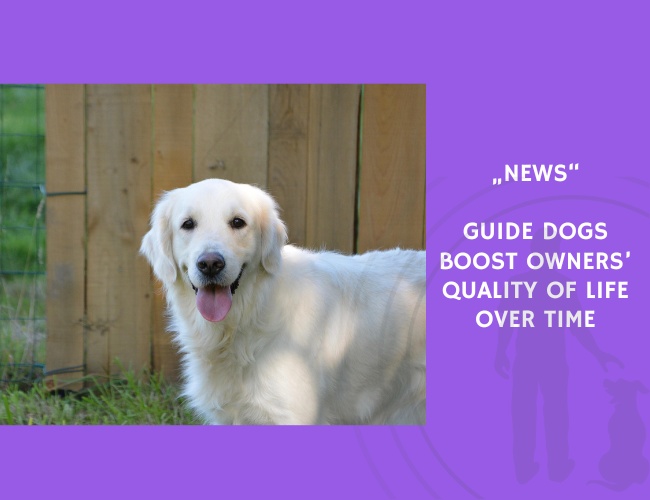
Individuals with visual impairments often face reduced quality of life (QOL), increased depression, and limited independence. Assistance dogs have previously been shown to improve daily functioning, but little research has examined these effects in guide dog owners over time.
McIver, Hall, and Mills (2020) conducted a longitudinal cohort study using the Flanagan Quality of Life Scale, comparing three groups: individuals on the UK national waiting list for a guide dog (n = 17), those who acquired a guide dog during the study (n = 15), and established guide dog owners (n = 14). Data were collected at two points in time to assess changes in QOL.
Results showed that individuals who acquired a guide dog experienced a significant increase in independence compared to those who remained on the waiting list. Both new and established guide dog owners reported higher perceived QOL over time, while those who remained on the waiting list experienced a decline. Gains were particularly strong in areas related to health, material comforts, and interpersonal relationships.
The findings emphasize that guide dogs provide more than mobility support—they enhance owners’ emotional well-being and daily life satisfaction. Compared with research on hearing and physical assistance dogs, guide dogs appear uniquely associated with improvements in material comfort and social connection, making them a vital resource for people with visual impairments.
Source: McIver, S., Hall, S., & Mills, D. (2020). The Impact of Owning a Guide Dog on Owners’ Quality of Life: A Longitudinal Study. Anthrozoös, 33, 103–117.