
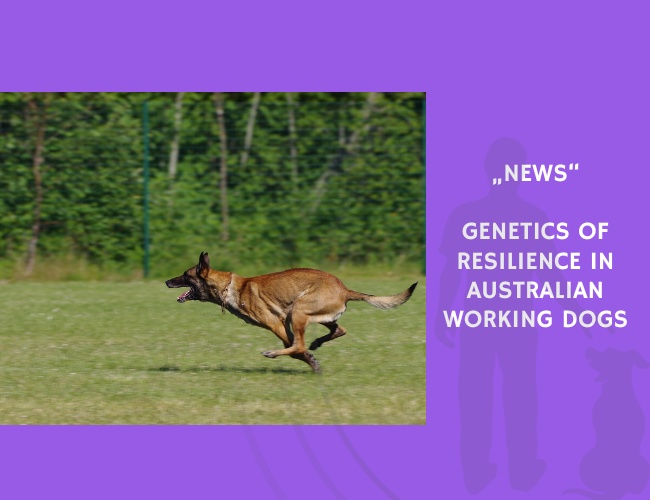
Working dog handlers and breeders have long emphasized the importance of resilience, courage, and adaptability in stock dogs. Arnott and colleagues (2015) investigated whether the genetics underlying such behavioural traits could be traced through selective sweep analysis, a method that identifies genomic regions shaped by strong selection pressures.
The study compared the genomes of two related breeds: the Australian Kelpie, bred mainly for urban and companion roles, and the Australian Working Kelpie, bred specifically for stock work. The analysis revealed a significant selective sweep on chromosome 3 in the Working Kelpie, encompassing genes involved in fear-memory formation and pain perception. These genetic adaptations likely contribute to the breed’s resilience and effectiveness in demanding working conditions.
By contrast, the Australian Kelpie, more common in urban environments, showed sweeps on chromosome 8 (potentially linked to behavioural excitability) and chromosome 30 (associated with morphology and coat traits). These findings highlight how divergent breeding pressures have shaped the genetic architecture of dogs derived from the same ancestral stock.
The authors propose that identifying such loci could improve the selection of superior working dogs, enhancing performance and welfare in agricultural settings. The study underscores how functional selection for resilience continues to shape the working abilities of modern stock dogs.
Source: Arnott, E. R., Peek, L., Early, J. B., Pan, A. Y. H., Haase, B., Chew, T., McGreevy, P., & Wade, C. (2015). Strong selection for behavioural resilience in Australian stock working dogs identified by selective sweep analysis. Canine Genetics and Epidemiology, 2. Published May 7, 2015.










