
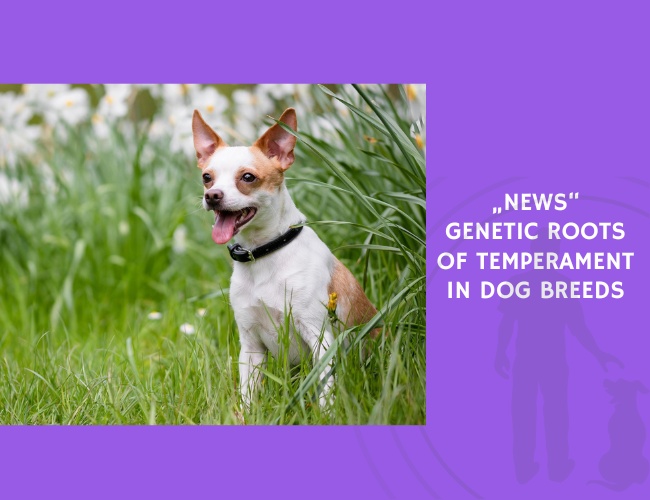
In the review article Genetics of Canine Behavior, published in Acta Veterinaria Brno, veterinary behaviorist Katherine A. Houpt synthesizes foundational and contemporary findings in the rapidly evolving field of canine behavioral genetics. The paper underscores how behavior arises from the interplay of heredity and experience, while highlighting the growing genomic tools available to researchers.
Houpt discusses extensive evidence indicating that many canine behaviors—such as hunting ability, playfulness, aggression toward people or dogs, and general temperament—have quantifiable heritability. Insights from the professional dog community continue to shape understanding of breed-specific tendencies, including reactivity, ease of training, and behavioral immaturity.
A substantial portion of the review examines the neurobiological underpinnings of aggression, focusing on the neurotransmitters implicated in impulsivity and threat responses. While a single “aggression gene” has not been identified, ongoing work with single nucleotide polymorphisms (SNPs) is revealing genomic markers associated with temperament variation across breeds.
Houpt highlights pioneering research on silver foxes conducted by Dmitry Belyaev and Lyudmila Trut, where long-term selection for tameness versus aggression produced profound behavioral and morphological changes. These fox studies provide a powerful comparative model for understanding how selective pressure reshapes social behavior and how tameness may be linked to floppy ears, curly tails, and piebald coloration.
The review also explores behavioral differences among dog breeds, including neoteny, social signaling styles, and prevalence of behavior problems. Work by Dr. Yukari Takeuchi and colleagues at Tokyo University is highlighted for making significant progress in mapping genes associated with breed-specific behaviors.
With the publication of the canine genome and advances in genetic analysis, Houpt notes that researchers are now better positioned to investigate how nature and nurture intertwine in shaping canine temperament. These insights have deep implications for breeders, veterinarians, and behavior professionals seeking to understand and support dogs across breeds and contexts.
Source: Houpt, K. A. (2007). Genetics of Canine Behavior. Acta Veterinaria Brno, 76, 431–444. https://doi.org/10.2754/avb200776030431










