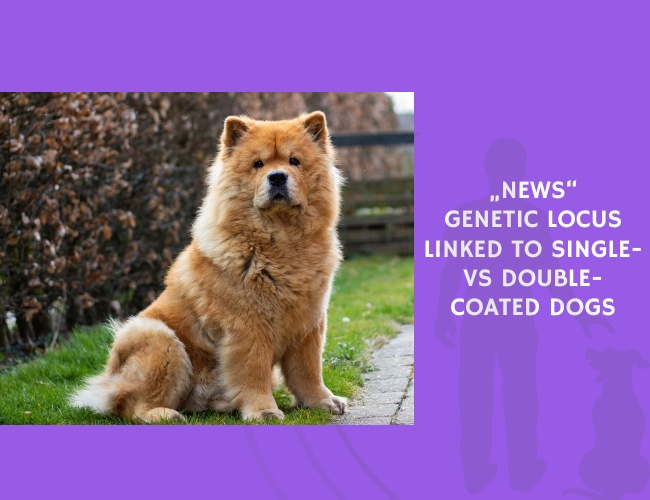
Published in Genes, this study by D. T. Whitaker and E. Ostrander examined the genetic basis of a key breed-defining feature: the presence or absence of an undercoat. Double-coated dogs possess both coarse guard hairs and a soft insulating undercoat—traits shared with wolves and considered ancestral. Single-coated breeds lack the undercoat, representing a derived state selected through domestication and breeding.
Using a combination of SNP array data and whole genome sequencing (WGS), the researchers conducted a genome-wide association study (GWAS) that identified a region on chromosome (CFA) 28 with a strong association to coat number.
Variant mapping within this region revealed an 18.4 kb locus containing 62 significant variants located in the intron of a long noncoding RNA (lncRNA) upstream of the gene ADRB1. Multiple lines of evidence point to this region acting as a cis-regulatory module with functional influence on coat phenotype:
• Two key variants occur at high frequency in single-coated breeds and are rare in wolves, suggesting selection during domestication.
• Both variants are predicted to alter transcription factor binding, implying regulatory effects on downstream gene expression.
This research is among the first to leverage WGS simultaneously for GWAS and fine-mapping of a breed-defining trait, demonstrating the power of integrated genomic approaches for unraveling canine phenotypic diversity.
Source: Whitaker, D. T., & Ostrander, E. (2019). Hair of the Dog: Identification of a Cis-Regulatory Module Predicted to Influence Canine Coat Composition. Genes. Published April 26, 2019.