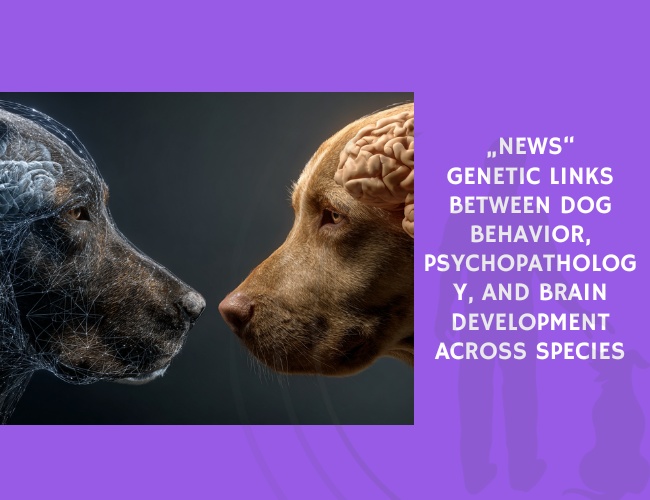
In this 2020 genetic analysis, I. Zapata, E. Hecht, J. Serpell, and C. E. Alvarez conducted genome scans on 17 normal and problematic dog behaviors across multi-breed cohorts. They mapped 90 genetic loci, with 21 loci replicated across datasets, revealing genetic regions associated with both canine behavior and brain structure.
The study identified a gene network responsible for neurogenesis, axon guidance, brain growth, and energy metabolism. Notably, several of the top genes were also associated with human brain structure, cognition, personality, and psychiatric disorders. These findings suggest a shared genetic architecture for behavior and psychopathology across mammalian species.
The authors propose that a conserved genetic system underlies neuron development throughout life, influencing both behavioral adaptation and vulnerability to mental health disorders. This genetic overlap supports the hypothesis that the same network contributes to the general factor of psychopathology (p-factor) in humans—a concept linking anxiety, depression, impulsivity, and other psychiatric patterns.
The study further demonstrates that behavioral genetics in dogs can serve as a powerful translational model for understanding human mental health. By examining pleiotropic gene functions—genes affecting multiple traits—the researchers highlight how neurogenesis and cognitive development intersect with behavior, personality, and emotional regulation.
Importantly, the study controlled for body size, showing that behavior-related genetic variation is not merely influenced by morphology but represents distinct neurobiological pathways. These findings imply that behavioral differences are tied to brain development and energy regulation, shaping both canine and human cognitive outcomes.
Zapata and colleagues conclude that behavior, cognition, brain structure, and psychopathology are linked by an evolutionarily conserved genetic super-network. This insight opens new avenues for understanding how genetic and environmental factors interact in shaping both canine and human emotional and behavioral health.
Source: Zapata, I., Hecht, E., Serpell, J., & Alvarez, C. E. (2020). Genome scans of dog behavior implicate a gene network underlying psychopathology in mammals, including humans. Published July 19, 2020.