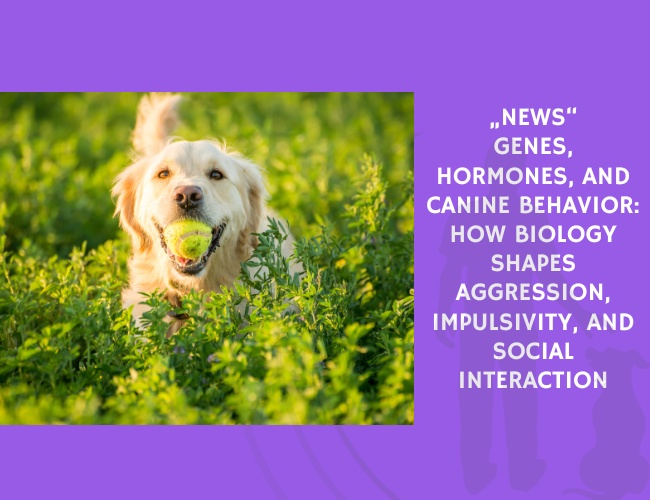
In this 2024 review published in the Journal of Animal Breeding and Genomics, Jin Hyung Kim and colleagues evaluated the biological foundations of canine behavior, focusing on how genetics and hormones shape emotional regulation, aggression, impulsivity, and social interaction. The authors analyzed findings from recent studies, highlighting key genetic markers and hormonal systems linked to behavioral outcomes.
Genetic analysis identified several genes associated with behavioral traits:
• DRD4 – linked to impulsivity, attention, and exploratory behaviors.
• OXTR – associated with social bonding, attachment, and emotional regulation.
• SLC6A4 – related to anxiety sensitivity and emotional reactivity.
• HTR1A, HTR1B, HTR2A – involved in aggression modulation and serotonergic regulation.
Hormonal influences also play a significant role in shaping canine behavior. The authors highlighted:
• Testosterone – positively associated with aggression and competitive behavior.
• Oxytocin – improves social interaction, bonding, and stress regulation.
• Cortisol – indicators of stress response, emotional strain, and behavioral reactivity.
The review concluded that behavioral differences among dogs are linked to combined effects of genetic predisposition, hormonal regulation, and environmental interaction. This synthesis supports the development of behavior-modification programs that incorporate biological markers to better address aggression and impulse-control issues.
The authors suggest that future research integrating genetic testing, hormonal profiling, and behavioral training could provide more targeted and effective strategies for improving canine welfare, particularly in cases of behavioral disorders.
Source: Kim, J. H., Cho, E., Kim, M., Song, K., Seo, D., & Lee, J. H. (2024). The impact of genes and hormones on canine behavior: A review of recent research. Journal of Animal Breeding and Genomics. Published December 31, 2024.