
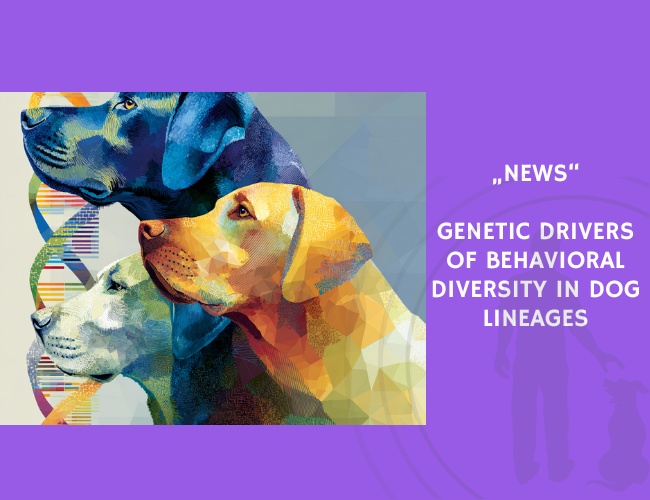
Dutrow, Serpell, and Ostrander (2022) addressed a central challenge in canine behavioral genetics: linking breed-typical behaviors to their genetic underpinnings despite the complexity of population structure. Their study analyzed genomic data from more than 4,000 domestic, semi-feral, and wild canids, alongside behavioral survey data from over 46,000 pet dogs.
The analysis revealed ten major genetic lineages, each associated with distinctive behavioral traits. Importantly, the findings showed that non-coding regulatory variants, rather than protein-coding mutations, are the primary drivers of behavioral diversification. Genes linked to these lineages were found to converge in neurodevelopmental co-expression networks, suggesting that selection has acted on regulatory pathways influencing behavior.
One striking example was the sheepdog lineage, which showed enrichment for axon guidance functions, reflecting the neural basis of complex herding behaviors. These discoveries provide a new scaffold for understanding how selective breeding shaped behavior across dog breeds and demonstrate that the domestic dog remains an unparalleled system for studying the genetic origins of behavioral diversity.
Source: Dutrow, E., Serpell, J., & Ostrander, E. (2022). Canine lineages reveal genetic drivers of dog behavioral diversification. bioRxiv. References: 83.










