
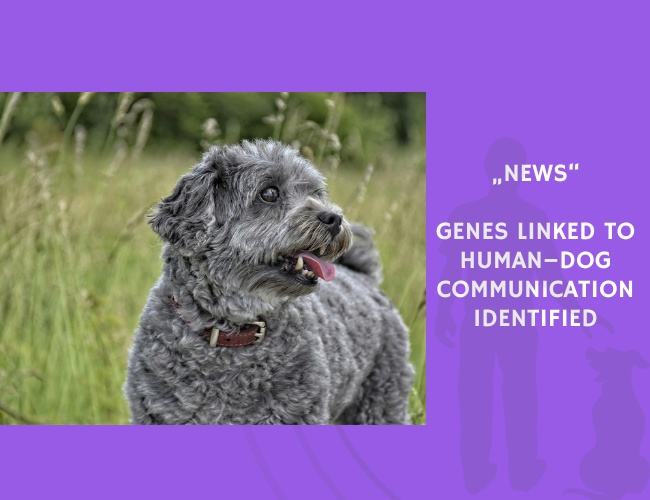
Dogs’ extraordinary ability to communicate with humans is one of the most distinctive outcomes of domestication. In a 2021 study published in Scientific Reports, Aya Tonoike and colleagues explored the genetic underpinnings of social cognition in dogs, examining how evolutionary changes at the molecular level may have facilitated human–dog communication.
The research focused on ancient and modern dog breeds to identify genetic differences associated with social behavior. Through genomic analysis, the team discovered several genes linked to glucocorticoid function—a hormonal system regulating stress and emotional reactivity. These genes appear to influence dogs’ social attention, gaze-following, and responsiveness to human cues, suggesting that hormonal pathways connected to stress regulation played a key role in shaping communicative abilities during domestication.
Interestingly, ancient breeds such as the Shiba Inu and Akita showed less dependence on human social cues compared to modern companion breeds, indicating that genetic evolution progressively enhanced affiliative and cooperative traits. The identified glucocorticoid-related genes were particularly associated with human-directed eye contact and emotional synchronization—behaviors that form the foundation of interspecies communication.
This study provides compelling evidence that the emotional and cognitive dimensions of dog–human relationships are deeply rooted in biology. The findings highlight that domestication was not merely behavioral adaptation but also genetic refinement of social cognition, enabling dogs to thrive as partners in human society.
By revealing the molecular basis of canine communication, Tonoike et al. open new pathways for understanding how hormonal regulation, genetics, and evolution interact to produce the empathetic and socially responsive nature of the domestic dog.
Source: Tonoike, A., Otaki, K., Terauchi, G., Ogawa, M., Katayama, M., Sakata, H., Miyasako, F., Mogi, K., Kikusui, T., & Nagasawa, M. (2021). Identification of Genes Associated with Human–Canine Communication in Canine Evolution. Scientific Reports, 12. Published August 27, 2021.










