
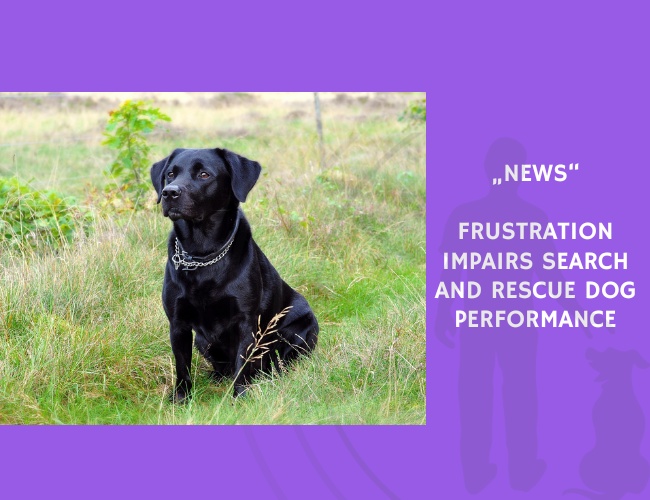
Despite advances in technology, search and rescue (SAR) dogs remain vital for locating missing persons in environments ranging from avalanches to disaster zones. Their exceptional olfactory skills, endurance, and adaptability make them indispensable. However, SAR work is also physically and psychologically demanding, often placing dogs under intense stress.
Dickinson and Feuerbacher (2025) compared two stressors: frustration-induced psychological stress and exercise-induced physiological stress. Using heart rate variability as a marker of stress, the researchers also assessed how each condition influenced search accuracy and latency in signaling target odors.
The results showed that frustration significantly reduced heart rate variability and increased response times, indicating a stronger disruption to both physiological state and performance compared with moderate exercise. While exercise alone posed some physical strain, it did not compromise task execution as much as frustration.
These findings underscore the importance of managing psychological stress in working dogs. Training programs that build resilience, maintain motivation, and prepare dogs for unpredictable challenges may help safeguard both welfare and operational effectiveness in high-stakes SAR missions.
Source: Dickinson, S., & Feuerbacher, E. N. (2025). Frustration and its impact on search and rescue canines. Frontiers in Veterinary Science, 12. Published March 7, 2025.










