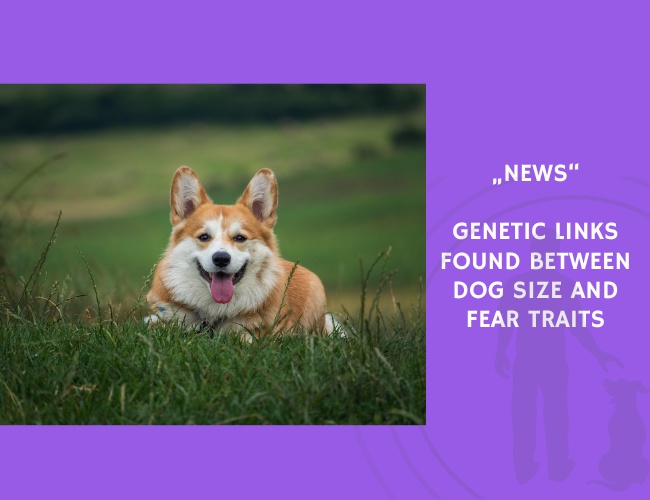
Fear, anxiety, and aggression have major impacts on canine welfare and human-animal interactions. While their neurobiology is well studied, the genetic basis of these traits remains less understood. To address this, Zapata, Serpell, & Alvarez (2016) performed genomewide association mapping across hundreds of dog breeds to identify genetic loci connected with fear and aggression.
The study found that variants at the IGF1 and HMGA2 loci, already known for determining small body size, were also associated with behaviors such as separation anxiety, touch sensitivity, owner-directed aggression, and rivalry with other dogs. These findings suggest that the same genetic factors influencing morphology may also shape emotional and social traits.
Additional loci were identified, including a region between GNAT3 and CD36 on chromosome 18, and a region near IGSF1 on the X chromosome, both linked with non-social fear, stranger-directed aggression, and touch sensitivity. Interestingly, some of these loci overlap with regions under strong evolutionary selection in dogs, highlighting their possible role in the domestication process.
The authors propose that reduced-fear genetic variants at these sites may have enabled early dogs to thrive alongside humans, while simultaneously shaping their physical appearance. This dual influence of genes on both body size and temperament provides a compelling example of how domestication pressures may have intertwined morphology and behavior in the evolution of dogs.
Source: Zapata, I., Serpell, J., & Alvarez, C. E. (2016). Genetic mapping of canine fear and aggression. BMC Genomics, 17. Springer Nature.