
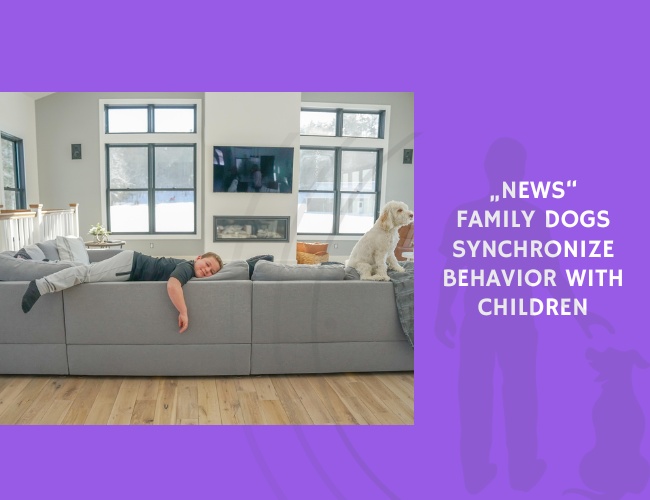
Published in Animal Cognition, the study by S. Wanser, Megan MacDonald, and M. Udell expands the field of dog social cognition by focusing on dog–child interactions, an area that has received far less scientific attention than dog–adult relationships. While synchrony between dogs and adult owners has been documented previously, this research asks whether similar patterns emerge when dogs interact with familiar children.
The authors examined whether dogs exhibit three core components of behavioral synchrony—activity synchrony, proximity, and orientation—when paired with a child family member. Their results showed strong evidence of synchrony across all three dimensions, with statistical significance at p < 0.0001 for both activity and proximity, and p = 0.0026 for orientation. These findings indicate that dogs match their behavior to children at levels far exceeding random chance.
The study suggests that the behavioral responsiveness dogs typically show toward adults also extends to cohabiting children. This supports the idea that dogs perceive familiar children as meaningful social partners and adjust their behavior accordingly. However, the authors also note key differences between dog–child and dog–adult synchrony patterns, highlighting that children may elicit distinct responses due to their movement patterns, communication styles, or developmental stage.
Given the widespread presence of dogs in households with children and the increasing use of dogs in child-centered animal-assisted interventions, understanding these dynamics carries practical importance. Insights into how dogs synchronize with children can help promote safer interactions, guide training practices, and inform intervention programs aimed at supporting both canine and child welfare.
Source: Wanser, S., MacDonald, M., & Udell, M. (2021). Dog–human behavioral synchronization: family dogs synchronize their behavior with child family members. Animal Cognition. Published January 12, 2021. Authors affiliated with departments of Psychology, Human Development, and Animal Behavior Research.










