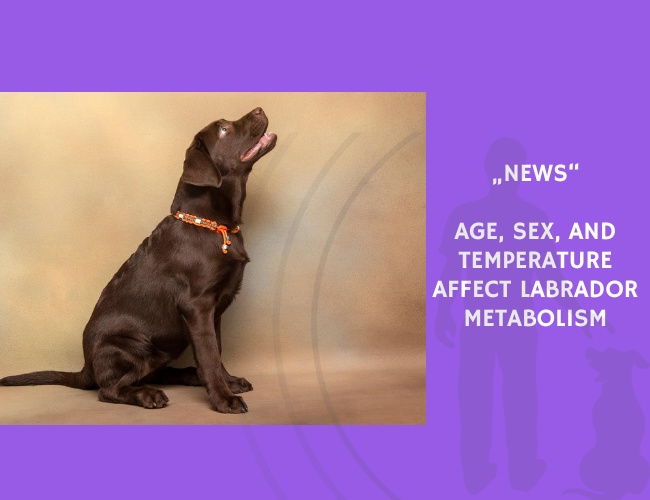
Understanding how physiological and environmental factors influence canine metabolism is crucial for optimizing diet formulations and maintaining healthy body weight. In a study published in the Journal of Animal Science, J. Varney and colleagues conducted one of the most comprehensive investigations into the energy requirements of working Labrador Retrievers.
The researchers measured the basal metabolic rate (BMR) of 96 Labradors using open-circuit indirect calorimetry under controlled laboratory conditions. They analyzed how BMR varied according to age, sex, reproductive status, body composition (via DXA scanning), and environmental temperature.
Results revealed several clear patterns. Males had significantly higher BMRs (136 ± 28 kcal/kg0.75) than females (125 ± 25 kcal/kg0.75; p = 0.045). Intact dogs also exhibited higher BMRs (121 ± 3 kcal/kg0.75) than neutered or spayed dogs (109 ± 25 kcal/kg0.75; p < 0.001). Age was another strong predictor: young and adult dogs maintained higher metabolic rates than senior dogs, whose BMR dropped to 120 ± 26 kcal/kg0.75.
Body composition analysis confirmed that lean mass increased BMR while fat mass reduced it (p < 0.001). Temperature had a nonlinear effect: BMR declined from cool to warm conditions but rose again at both extremes (35°C), reflecting the body’s effort to maintain thermal homeostasis.
The authors concluded that canine energy metabolism is influenced by multiple interacting factors, including age-related muscle loss, reproductive hormones, and ambient conditions. These findings have important implications for the pet food industry and veterinarians aiming to tailor diets to the needs of specific dog demographics. The data emphasize the importance of adjusting calorie intake based not only on size but also on physiological status and environment.
By identifying key metabolic differences between individual dogs, this research supports the development of more targeted, science-based nutrition strategies to promote health, longevity, and performance in working and companion dogs alike.
Source: Varney, J., Fowler, J., Weil, J., Watson, C. P. N., Boggess, M., & Coon, C. (2019). Effect of Age, Sex, Reproductive Status, Body Composition, and Environmental Temperature on the Basal Metabolic Rate of Working Labrador Retrievers. Journal of Animal Science, 97, 317–318. Published December 5, 2019.