
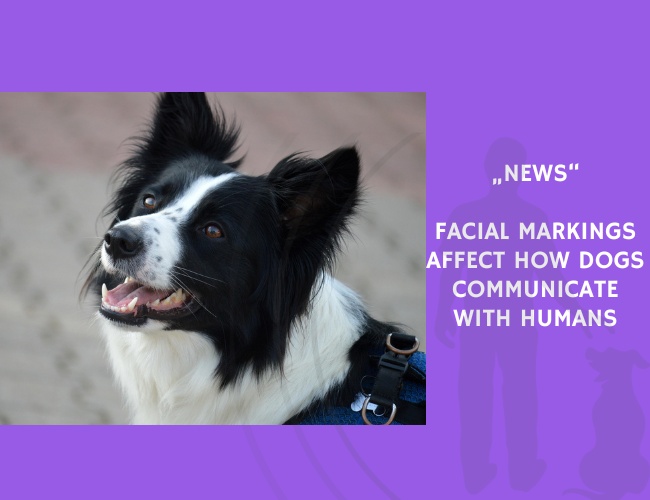
Facial expressions play a vital role in communication, not only among humans but also between humans and dogs. In a 2023 study published in Animals, C. Sexton and colleagues explored how a dog’s facial appearance—specifically the complexity of its markings—affects both expressivity and human perception of emotion.
Using over 100 dogs from eight breed groups, researchers quantified facial expressivity with the Dog Facial Action Coding System (DogFACS) and created a standardized model to rate facial pattern complexity. The results revealed a statistically significant, though modest, correlation: dogs with plainer faces displayed higher expression rates than those with more intricate markings. The correlation (r = −0.326, p ≤ 0.001) indicates that fewer facial markings make movements—such as eyebrow lifts or cheek tension—more visible to humans.
The study also found that adult dogs were generally more expressive than seniors, and trained or working dogs exhibited greater expressivity than untrained companions. Moreover, human owners were more accurate in judging the emotions of adult dogs with simple facial patterns, suggesting that clarity of visual cues improves interspecies understanding.
Interestingly, dogs’ facial expressivity varied by context. During highly social interactions, dogs engaged a broader range of facial muscles, whereas they used fewer, localized movements when responding to ambiguous cues from their owners. This suggests that expressivity is not fixed but dynamically modulated by social engagement and emotional relevance.
Sexton et al. emphasized that these findings have practical implications for training, welfare, and communication. Trainers and caregivers might consider how facial markings influence both dogs’ ability to convey emotion and humans’ ability to interpret it. The research contributes to a growing understanding of visual communication in the human–dog bond—a key factor in empathy, cooperation, and successful companionship.
Source: Sexton, C., Buckley, C., Lieberfarb, J., Subiaul, F., Hecht, E., & Bradley, B. (2023). What Is Written on a Dog’s Face? Evaluating the Impact of Facial Phenotypes on Communication between Humans and Canines. Animals, 13. Published July 1, 2023.










