
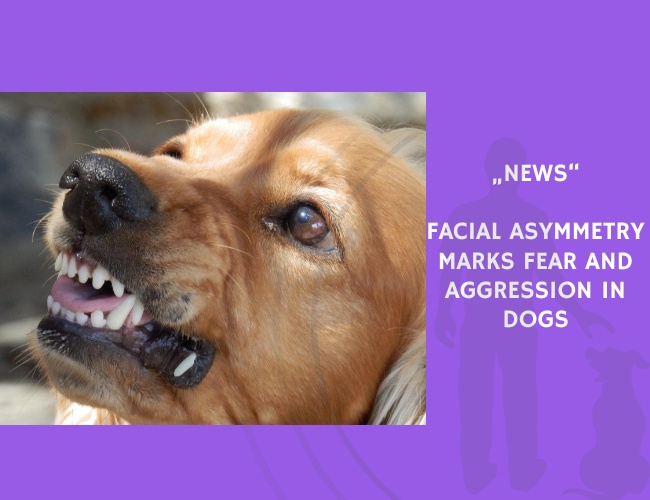
Facial expressions in dogs are increasingly recognized as windows into their emotional states. Previous work has shown that specific expressions emerge in response to arousing stimuli. In humans, facial asymmetry has long been linked to stress, fear, and aggression, yet until recently, little was known about its role in dogs.
Siniscalchi et al. (2022) investigated whether dogs with fearful or aggressive behaviors toward humans show lateralized facial expressions in social contexts. The study examined two scenarios: when dogs were with their owners and when approached by an unfamiliar person. Researchers found that dogs exhibiting these behavioral issues showed high levels of facial asymmetry compared to typical dogs.
These findings suggest that measuring facial asymmetry could become a valuable non-invasive tool for identifying and studying physiology-based behavioral disorders in dogs. By linking subtle physical signals to underlying emotional states, veterinarians and behaviorists may be better equipped to assess risk and design interventions that improve both welfare and human–dog relationships.
Source: Siniscalchi, M., d’Ingeo, S., Minunno, M., & Quaranta, A. (2022). Facial asymmetry in dogs with fear and aggressive behaviors towards humans. Scientific Reports, 12. Published November 15, 2022.










