
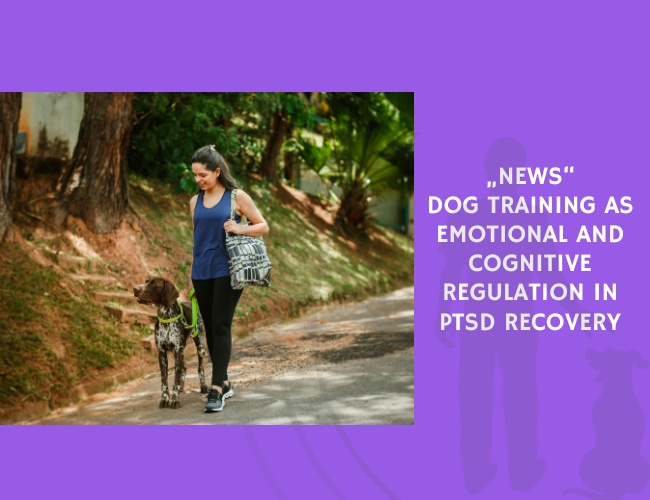
Published in the European Journal of Psychotraumatology, this study investigated the psychological and physiological outcomes of a year-long dog-training intervention in 53 adolescents previously diagnosed with post-traumatic stress disorder (PTSD) following interpersonal trauma. Unlike pharmacological treatments, which primarily target symptom management, this approach fostered active emotional engagement and self-regulation through structured human–dog interaction.
The findings revealed significant reductions in core PTSD symptoms—re-experiencing, avoidance, and hyperarousal—alongside improved cognitive flexibility and attentional stability. Participants developed stronger emotional control, likely due to the reciprocal nature of the training process, where regulating one’s own affect becomes essential to guiding the dog’s behaviour. Notably, the dogs themselves exhibited improved calmness, focus, and responsiveness over the course of the program, underscoring a bi-directional therapeutic effect.
The authors propose that dog training may act as a form of experiential emotional regulation therapy. Through daily structured interaction, participants practice consistency, empathy, and impulse modulation—skills directly transferable to trauma recovery. The process reinforces attention control and grounding in the present moment, countering the cognitive fragmentation typical of PTSD.
Unlike traditional pharmacotherapy, this intervention not only mitigated symptoms but also influenced participants’ diagnostic status, with many no longer meeting full PTSD criteria post-program. The study highlights the potential for integrative, non-pharmacological interventions where animal-assisted training complements clinical therapy, offering sustainable recovery pathways for both civilians and veterans affected by trauma.
Source: Maoz, I., Zubedat, S., Dolev, T., Aga‐Mizrachi, S., Bloch, B., Michaeli, Y., Eshed, Y., Grinstein, D., & Avital, A. (2021). Dog training alleviates PTSD symptomatology by emotional and attentional regulation. European Journal of Psychotraumatology, 12. Published January 1, 2021.










