
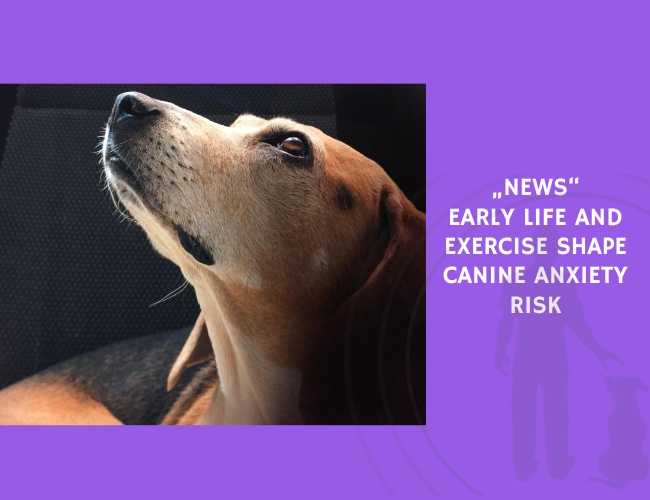
Anxiety-related behaviors such as fearfulness, noise sensitivity, and separation anxiety are common welfare concerns in domestic dogs. While genetic predispositions are known to play a role, the contribution of environmental factors across early development and adulthood has remained less clearly defined.
In this large-scale questionnaire study, researchers led by :contentReference[oaicite:0]{index=0} and :contentReference[oaicite:1]{index=1} analyzed data from a Finnish companion dog population (n = 3,264) to examine how early life conditions and lifestyle factors associate with anxiety-related traits.
The results revealed that fearful dogs were significantly more likely to have experienced reduced socialization during puppyhood and lower-quality maternal care. Puppies raised with inadequate maternal interactions showed markedly higher levels of fearfulness later in life, underscoring the long-term behavioral impact of early caregiving environments.
One of the most striking findings concerned daily exercise. Dogs exhibiting noise sensitivity and separation anxiety consistently received less daily physical activity than unaffected dogs. Daily exercise emerged as the strongest environmental factor associated with these anxiety phenotypes, exceeding the influence of several other measured variables.
These associations mirror findings in other species, including humans and rodents, where early life stress and insufficient physical activity are well-established contributors to anxiety disorders. The parallels suggest that shared biological mechanisms may underlie anxiety vulnerability across species.
The authors emphasize that these environmental factors also represent important confounders in genetic studies of canine anxiety. Failure to account for early maternal care, socialization quality, and exercise levels may obscure or distort interpretations of genetic risk.
Overall, the study highlights that improving early puppyhood environments and ensuring adequate daily exercise are not only welfare priorities but also essential components of responsible dog management and breeding practices. These findings reinforce the view that canine anxiety is shaped by a dynamic interaction between genes and environment throughout development.
Source: Tiira, K., Lohi, H. Early Life Experiences and Exercise Associate with Canine Anxieties. PLoS ONE, published 2015.










