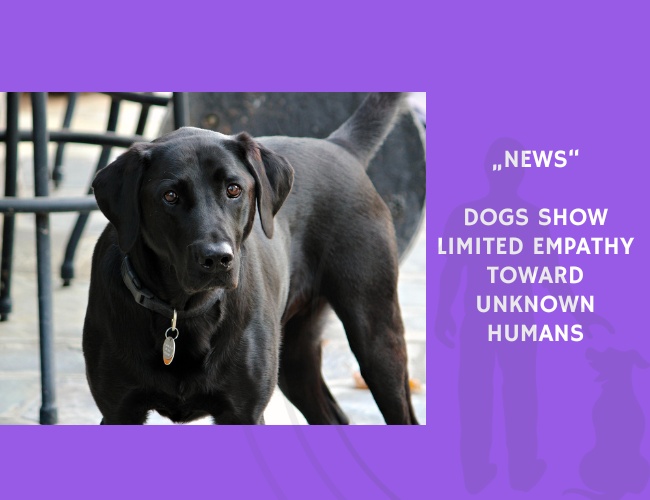
Published in Animals, this study by Micaela Rivera and Julia E. Meyers-Manor explored whether dogs demonstrate empathy-like behaviors toward unfamiliar humans in distress. While dogs are well-documented for rescuing or responding to their owners’ emotional cues, it remained unclear whether this empathy extends to strangers.
In the experiment, a stranger was placed behind a transparent door and instructed to either cry (distress condition) or hum (neutral condition). Researchers then measured dogs’ door-opening behavior, heart rate variability, and stress-related behaviors. Surprisingly, dogs showed no significant difference in their responses between the two conditions. They did not open the door more frequently or quickly for distressed strangers compared to calm ones, nor did their physiological indicators of stress differ.
Dogs that did choose to open the door were described by their owners as less fearful and less aggressive, suggesting that personality and emotional stability may influence empathetic responses. Overall, however, the findings indicate that empathy-like behavior in dogs may be limited to familiar humans and is moderated by the presence and emotional cues of their owners.
This research highlights that empathy in dogs is not an automatic response to human distress—it may depend on social familiarity, environmental context, and emotional safety. These insights remind owners and trainers that trust and attachment are essential foundations for empathy-driven cooperation in dogs.
Source: Rivera, M., & Meyers-Manor, J. E. (2024). Beware of Strangers: Dogs’ Empathetic Response to Unknown Humans. Animals, 14. Published July 1, 2024.