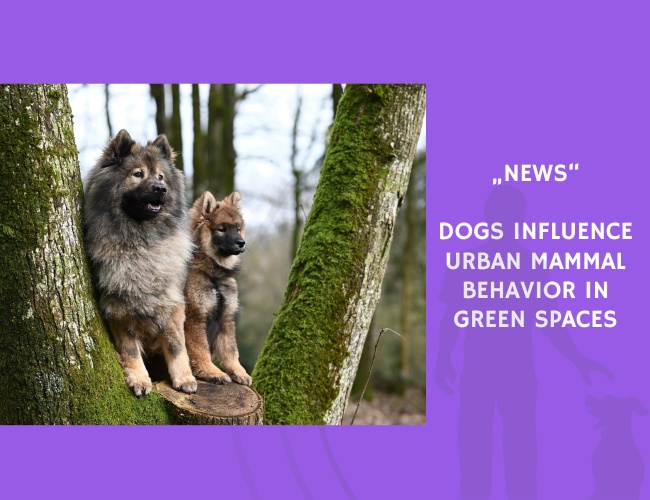
Urban green spaces provide food and shelter for synanthropic mammals, but their coexistence with dogs introduces unique behavioral pressures. Avendaño-Díaz and colleagues (2025) studied how feral dogs influence the foraging patterns and spatial distribution of opossums (Didelphis marsupialis), ringtails (Bassariscus astutus), and gray foxes (Urocyon cinereoargenteus) in a park in Mexico.
Using camera traps and scent stations, researchers found that feeding patterns remained stable despite dog presence. However, vigilance behaviors were significantly altered. Opossums and gray foxes showed increased vigilance when dogs were nearby, while ringtails’ vigilance was affected both by dog presence and habitat type.
Spatial use also shifted: opossums favored vegetation cover, while dogs were most active in grass areas, roads, and recreation zones. Gray foxes and ringtails used both vegetation and open spaces but adjusted their vigilance according to dog activity.
The findings suggest that dogs influence wildlife not by limiting food access but by reshaping risk perception and spatial choices. This species-specific response highlights the need for effective dog management strategies in urban green areas to minimize predation risk and improve the welfare of native mammals.
Source: Avendaño-Díaz, M., Delfín-Alfonso, C., García-Feria, L., Hidalgo-Mihart, M., Lagunes-Merino, O., & Morales-Mávil, J. (2025). Foraging patterns and spatial distribution of synanthropic mammals and their interaction with dogs. Revista de Biología Tropical.