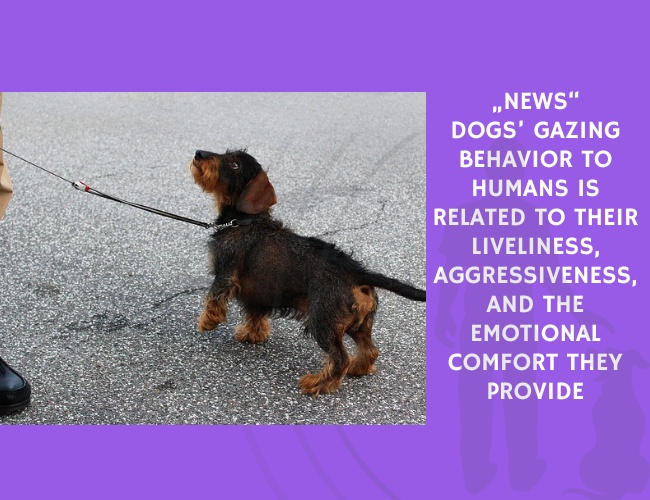
Published in Animals (MDPI), this study explored how family dogs use gaze as a form of social communication under uncertain conditions. Researchers observed dogs responding to a remote-controlled toy car—a novel stimulus—and analyzed how frequently they looked at their owner and an experimenter within a one-minute trial. Based on gaze patterns, dogs were categorized into four behavioral clusters reflecting differences in temperament and social orientation.
The findings revealed that dogs gazing 6–7 times at each human were rated as less aggressive than those who gazed only 2–3 times, while those gazing 10–12 times were described as more lively and active. Moreover, dogs that looked more often at their owner than at the experimenter were perceived by owners as providing greater emotional comfort—for example, making them feel loved and emotionally supported. This indicates that gaze frequency and focus direction not only signal behavioral tendencies but also reflect the dog’s emotional impact on its human partner.
Breed-related differences also emerged: German Shepherds were more likely to be low gazers, showing fewer social look-backs, while Golden Retrievers tended to engage more visually. Interestingly, age, sex, and approach behavior toward the toy did not significantly influence gaze frequency, suggesting that personality and relational context are stronger determinants of visual engagement than demographic or situational factors.
Kubinyi and colleagues highlight that understanding canine gaze as a communicative and emotional signal can enhance training, bonding, and welfare practices. A dog’s gaze is not just a request for guidance—it reflects trust, personality, and relational depth within the human–dog partnership.
Source: Kubinyi, E., Sommese, A., Gácsi, M., & Miklósi, Á. (2025). Dogs’ Gazing Behavior to Humans Is Related to Their Liveliness, Aggressiveness, and the Emotional Comfort They Provide. Animals, 15. Published February 1, 2025.