
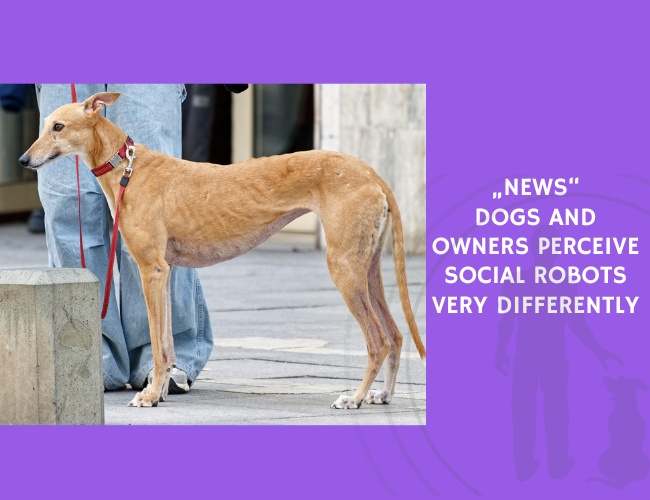
Presented at the International Conference on Human-Agent Interaction, Haruka Kasuga and Yuichiro Ikeda investigated how dog owners and dogs perceive and respond to the same physical social agents. As smart speakers and humanoid robots increasingly enter domestic environments, understanding their impact on both humans and companion animals has become an emerging research area.
The study employed three types of communication agents: a dog-like smart speaker, the humanoid robot NAO, and the humanoid robot Pepper, with Google Home included as a reference device. Two experiments were conducted: one assessing owners’ impressions of the agents and another analyzing dogs’ behavioral responses when owners interacted with the agents or when agents addressed the dogs directly.
Using data from 33 dog owners and 21 dogs, the researchers analyzed owner perceptions with the GODSPEED questionnaire. Results showed that the dog-like smart speaker was rated significantly lower than humanoid robots in terms of anthropomorphism, animacy, likability, and perceived intelligence. It was also rated lower than Google Home on animacy, likability, and perceived intelligence, and lower than Pepper on perceived safety.
In contrast, canine behavioral analysis revealed the opposite pattern. Dogs displayed a significantly higher frequency of social behaviors, such as sniffing and investigatory actions, toward the dog-like smart speaker than toward humanoid robots or other agents. This suggests that dogs respond more strongly to cues resembling conspecific signals, regardless of owners’ subjective evaluations.
The authors emphasize that although the study is exploratory and limited by sample size and behavioral indicators, it represents a first step toward bridging the perceptual gap between owners and dogs. By examining both human impressions and canine behavior toward identical agents, the research highlights the importance of considering species-specific perception when designing and introducing social technologies into shared human–dog environments.
Kasuga, H., & Ikeda, Y. (2020). Gap between Owner’s Perceptions and Dog’s Behaviors Toward the Same Physical Agents: Using a Dog-like Speaker and a Humanoid Robot. Proceedings of the International Conference on Human-Agent Interaction, published November 2, 2020.










