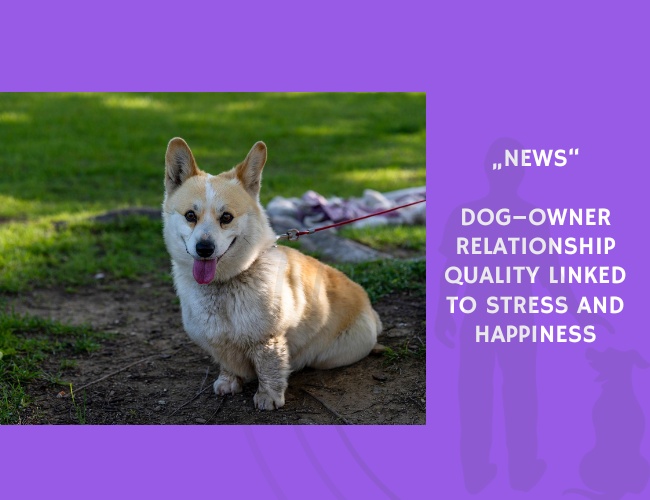
The human–dog bond has long been associated with emotional benefits, but its effects depend heavily on the quality of the relationship. González-Ramírez, Landero-Hernández, and Vanegas-Farfano (2018) examined how relationship quality influences owners’ perceived stress and happiness.
Involving 483 dog owners in Mexico, the study used the Monash Dog Owner Relationship Scale, the Perceived Stress Scale, and the Subjective Happiness Scale to analyze the dynamics between daily interactions, relationship quality, stress, and happiness. Results showed that shared activities and consistent interaction strengthened the owner–dog relationship, which in turn predicted lower stress levels. Stress was also identified as a negative predictor of subjective happiness, linking the bond with overall well-being.
The findings suggest that while dogs provide emotional support, the true benefits of the bond depend on the quality of interaction and mutual engagement between owner and pet. Stronger, more interactive relationships lead to greater happiness and reduced stress, underscoring the importance of nurturing daily dog–owner activities.
Overall, the study concludes that the human–animal bond acts as a mediator for emotional well-being, with relationship quality determining whether dog ownership contributes positively to stress reduction and happiness.
Source: González-Ramírez, M. T., Landero-Hernández, R., & Vanegas-Farfano, M. (2018). The effects of dog-owner relationship on perceived stress and happiness. Human-Animal Interaction Bulletin. Published December 1, 2018.