
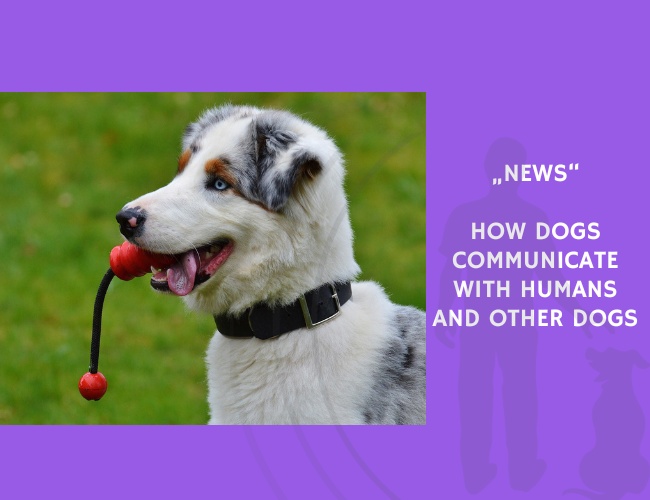
Communication is central to social life in both humans and animals, and dogs have evolved one of the most flexible and expressive communication systems among mammals. In their 2018 review published in Animals, M. Siniscalchi and colleagues synthesized research on how dogs use multi-sensory signaling to convey information and emotions during interactions with conspecifics and humans.
Dogs employ a combination of visual cues—such as ear and tail position, facial expressions, and body posture—to express intent and emotional state. These signals often differ subtly when directed at humans, reflecting the species’ ability to adapt communication across contexts. For example, eye contact and gaze-following behaviors, rare in wolves, have become key features of dog–human bonding and cooperation.
In addition to visual cues, dogs rely on tactile, auditory, and olfactory communication. Tactile behaviors, such as nudging or leaning, often reinforce affiliative bonds. Vocalizations, including barks, whines, and growls, vary in pitch and duration to signal different emotional states. Olfactory cues, derived from body odor and glandular secretions, play crucial roles in both social hierarchy and reproductive signaling. Together, these modalities create a rich communicative repertoire that dogs flexibly adjust based on social partners and context.
The review also highlighted emerging evidence for brain lateralization in canine communication—where specific hemispheres process emotional or social information. This neural asymmetry mirrors patterns seen in humans and other primates, suggesting a shared biological basis for complex social communication.
By integrating findings from behavioral science, neuroscience, and ethology, Siniscalchi and colleagues emphasized that dog communication is not merely instinctual but represents a cognitive and emotional dialogue shaped by 30,000 years of coevolution with humans. Understanding this multidimensional system enhances our appreciation of dogs’ social intelligence and provides valuable guidance for improving training, welfare, and human–dog relationships.
Source: Siniscalchi, M., d’Ingeo, S., Minunno, M., & Quaranta, A. (2018). Communication in Dogs. Animals, 8. Published July 31, 2018.










