
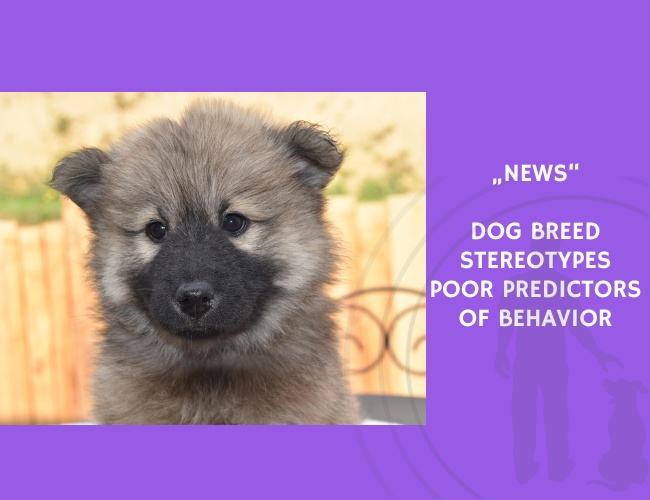
Dog behavior is often stereotyped by breed, with assumptions that certain breeds are naturally aggressive, obedient, or sociable. However, a large-scale genomic and survey-based study led by Kathleen Morrill and colleagues (2022) challenges these views. Researchers collected behavioral data from 18,385 dogs and sequenced the genomes of 2,155 dogs, representing both purebred and mixed-breed populations.
The findings reveal that most behavioral traits are heritable, yet breed ancestry explains only about 9% of the variation among individual dogs. While some traits, such as biddability (responsiveness to human direction), showed modest associations with specific breeds, many other behaviors, including human sociability and aggression thresholds, did not align with breed stereotypes.
Genome-wide association analyses identified 11 genetic loci significantly associated with behavior, but these were not strongly differentiated by breed. Instead, the study suggests that behavioral traits are the result of polygenic adaptation over thousands of years, predating modern breed formation. In contrast, modern breeds were found to be primarily distinguished by aesthetic traits shaped by selective breeding over the past ~160 years.
This research underscores that while breed may provide limited insight into certain traits, individual variation is far more important. The study urges owners, veterinarians, and policymakers to avoid relying on stereotypes when assessing dog behavior or suitability as companions.
Source: Morrill, K., Hekman, J., Li, X., McClure, J., Logan, B., Goodman, L., Gao, M., Dong, Y., Alonso, M., Carmichael, E., Snyder‐Mackler, N., Alonso, J., Noh, H. J., Johnson, J., Koltookian, M., Lieu, C., Megquier, K., Swofford, R., Turner-Maier, J., … Karlsson, E. (2022). Ancestry-inclusive dog genomics challenges popular breed stereotypes. Science, 376. DOI: 10.1126/science.abk0639










